


Yong Teck Lee
LAHAD DATU: A two-day conference that concluded here yesterday was a great boost of confidence of a new chapter in development in Sabah.
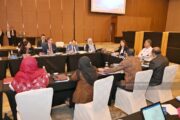
The presentations from about a dozen Malaysian and international speakers and the support of Federal Government at the Sabah International Blue Economy Conference (SIBEC) 2024 were a solid endorsement of Sabah’s pursuit of the Blue Economy.
Broadly, Blue Economy encompasses the sustainable development of resources of the seas, coasts and rivers as well as shipping, logistics, as well as matters of ports and harbours.
Sabah is the first state in the country to declare an intent to pursue the Blue Economy. It is accordingly drawing up a framework to guide implementation.
Speakers at SIBEC were generally agreed that Sabah’s maritime resources are vast and untapped. They alluded to Sabah being surrounded by the South China Sea, the Sulu Sea and the Celebes Sea, and has a lengthy coastline that makes up a third of Malaysia’s total. The state also have much offshore oil & gas operations, and enormous deep-sea fishing potentials waiting to be developed.
“Put simply, Blue Economy is directing Sabah to look to maritime related sectors that will diversify our economy, open new doors to investments and generate spinoffs that catalyse growth in other sectors of our economy,’ said Datuk Seri Yong Teck Lee, the Chairman of state-owned POIC Sabah Sdn Bhd which is developing the POIC Lahad Datu industrial park and running POIC Lahad Datu Port.
He is envisaging a significant POIC role in the supply of human capital in the Blue Economy goals.
Working with the Sealestial Marine Seafarer Training Centre, University College Sabah Foundation and the BIMP-EAGA Business Council, POIC has been planning a maritime academy, to be sited at POIC Lahad Datu, to produce trained workers for the maritime industry.
It is in line with POIC Sabah’s vision of a logistics hub along Sabah’s East coast, leveraging on its central location within the largely ‘maritime’ territories of EAGA (East Asean Growth Area).
Yong said it has been said that the maritime industry is the backbone for global trade, which continues to grow.
‘We envisioned our academy (the BIMP-EAGA Maritime Academy, BEMA) to enhance our positioning as a logistics hub, produce trained workers to support the growth of the maritime industry growth in this region, and offer job training and advancement opportunities for Sabahans.
Meanwhile, workers in the maritime sector including fishing trawler skippers and crew, are dominated by foreign nationals.
Annually they remit a significant amount of monies from their enrolments back to their native countries.