

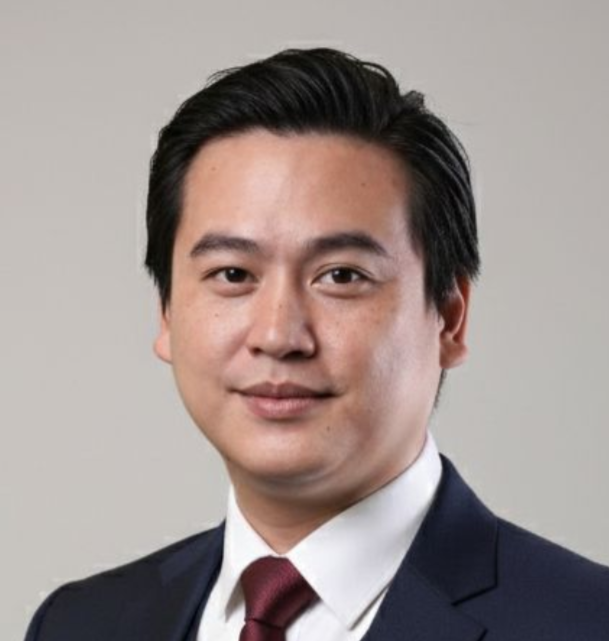
Ceasar Mandela Malakun
KOTA KINABALU: Sabah will enter a new phase of development with the launch of the Hala Tuju Sabah Maju Jaya Development Plan (SMJ) 2.0 on 30 January, signalling a shift towards a more confident, competitive and respected position within Malaysia and beyond.
Assistant Minister to the Chief Minister Datuk Ceasar Mandela Malakun said SMJ 2.0 represents a clear decision by the state to stop viewing itself as a periphery and instead move forward as a region built on sound decision-making, discipline and consistency.
“Sabah has always carried more than its fair share of expectations. For years, Sabahans have been told to be patient, to accept constraints and to believe progress will come sooner or later. But time does not build a future. The future is built by sound decision making, discipline and consistency,” he said in a statement today.
Mandela said SMJ 2.0 is significant because Sabah has never lacked talent or resources, but has often suffered from a lack of continuity, particularly when political changes resulted in shifting priorities.
“When politics changes, priorities shift. Some leaders try to cuci tangan, but Sabahans remember the cost,” he said.
He cited the loss of momentum in the Pan Borneo Highway project following the cancellation of the Project Delivery Partner model by the previous administration, describing it as policy flip-flops or political witch-hunting that ultimately burdened the rakyat.
“The result was the same. The rakyat paid,” he said.
Mandela also highlighted the unlawful termination of nine operators managing water treatment plant operations across Sabah, which resulted in RM315 million in compensation and damages being paid by the state.
“That RM315 million could have built more than 3,000 units of Rumah Mesra SMJ for the hardcore poor. Three thousand families with a roof over their heads,” he said.
He stressed that the episode underscored the importance of continuity in governance, protecting public funds and avoiding knee-jerk decisions that harm the people.
“This is why continuity matters. Finish what must be finished, protect public funds and stop making knee-jerk decisions that punish the people,” he said.
According to Mandela, these considerations formed the basis of SMJ 1.0, which focused on stabilisation to restore confidence, rebuild coordination, strengthen fiscal discipline and establish clear priorities.
“You cannot expand a house if the pillars are cracked,” he said.
He explained that SMJ 2.0 now moves Sabah into a phase of transformation, focusing on fixing structural issues, building essential infrastructure and measuring performance through tangible outcomes.
“SMJ 2.0 is anchored on Rumah Kita, Kita Jaga. A simple principle. Sabah’s interests first, Sabah’s rights defended and development shaped by Sabahans for Sabah’s long-term future,” he said.
Mandela said the direction of SMJ 2.0 is guided by four pillars — Sabah First, Sabah Forward, Sabah Prosper and Sabah United.
“Sabah First means everyday needs and Sabah’s rights are non-negotiable. Sabah Forward means preparing for the future economy through skills, digital capacity and new industries that create value,” he said.
He added that Sabah Prosper emphasises development that is felt by the people through functioning basic services, improved livelihoods and real opportunities, while Sabah United focuses on moving forward together in a stable, cohesive and inclusive manner.
Addressing Sabah’s youth, Mandela said the success of SMJ 2.0 will be judged by whether young people are given a fair chance to build their future in the state.
“You are not asking for special treatment, only a fair chance. Decent jobs, relevant skills, affordable mobility and the confidence that you can build your future here in Sabah,” he said.
Mandela also highlighted the importance of leadership in ensuring continuity and delivery, praising Chief Minister Datuk Seri Hajiji Noor for maintaining stability during challenging periods.
“Leadership matters. Chief Minister Datuk Seri Haji Hajiji Haji Noor has kept Sabah steady when instability would have been easier. Stability is not the end goal, but it is the platform for results,” he said.
He said SMJ 2.0 is aimed at turning stability into momentum and momentum into delivery.
“On 30 January, we are not just unveiling a document. We are setting the course for the next chapter of Sabah, rooted in dignity, driven by performance and held together by unity,” he said.
Mandela called on Sabahans to believe in the state’s potential, trust steady leadership and move forward together.