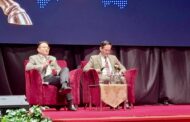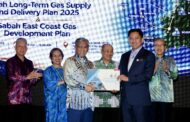


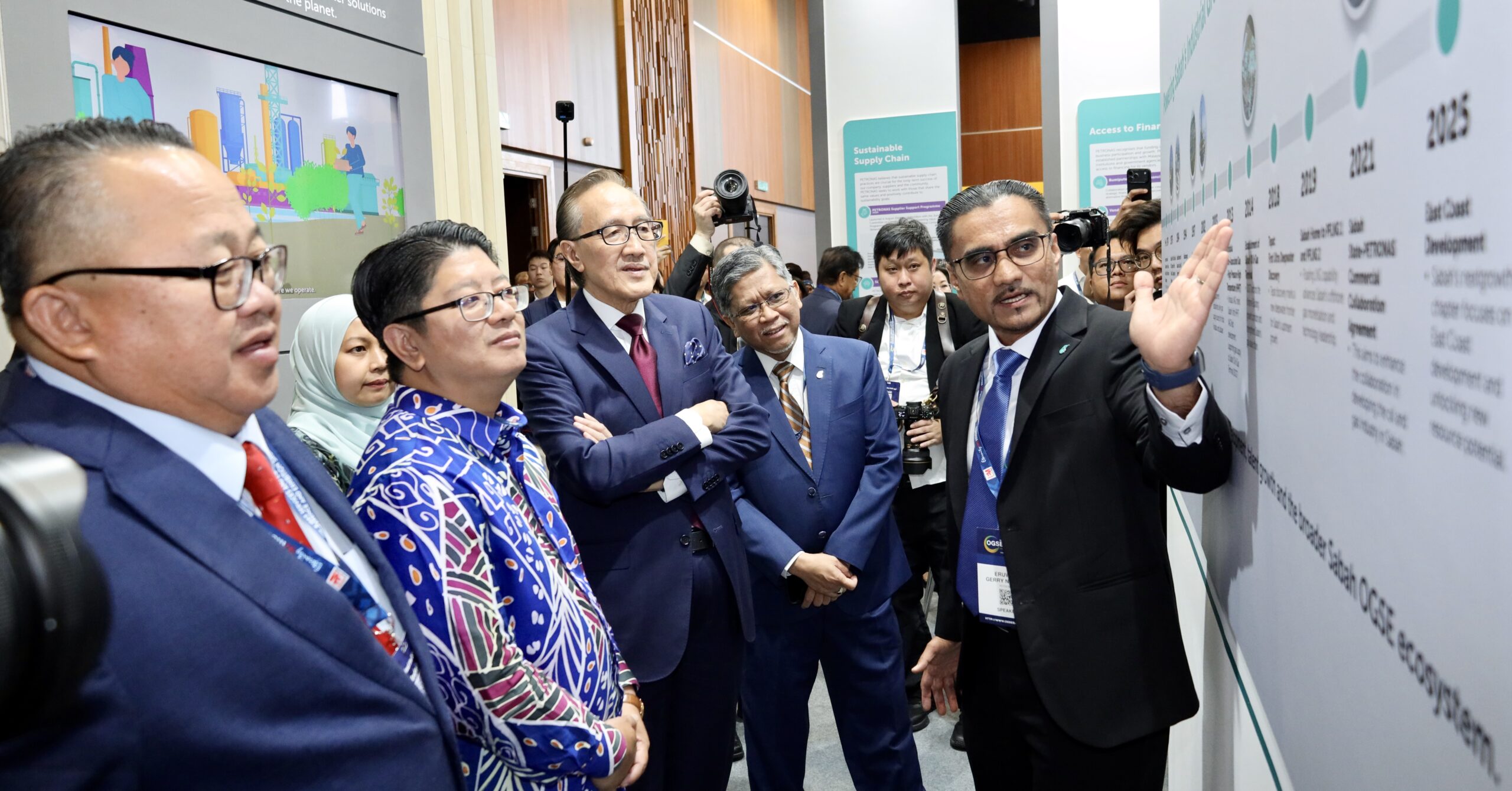
Masidi listening to a briefing from PETRONAS during the Sabah OGSE Conference and Exhibition 2026 at SICC, Kota Kinabalu.
KOTA KINABALU: The State Government is formulating a five-year Sabah Oil and Gas Services and Equipment (OGSE) Roadmap (2026–2030) aimed at building a sustainable and resilient OGSE industry in the state.
Chief Minister Datuk Seri Haji Hajiji Haji Noor said the roadmap would not be developed through a rigid top-down approach but through close collaboration between the government, PETRONAS and key industry stakeholders.
“A strong and resilient industry must be shaped through close collaboration among the government, PETRONAS and all key stakeholders, including operators, contractors, vendors, industry associations, financial institutions and training providers,” he said when officiating at the opening of the inaugural OGSE Conference and Exhibition 2026 at Sabah International Convention Centre (SICC) here today. His speech was read by Deputy Chief Minister II cum Finance Minister Datuk Seri Masidi Manjun.
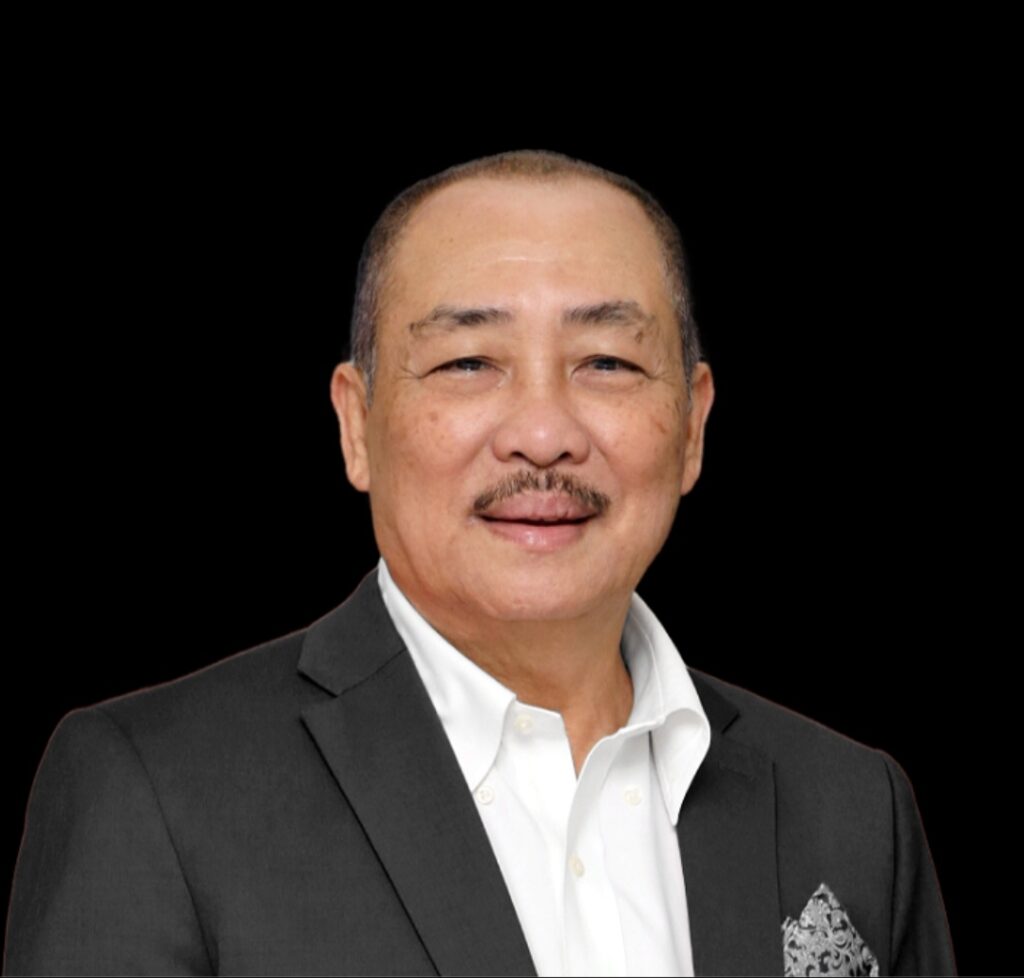
Haji Hajiji Haji Noor
Hajiji said feedback from stakeholders would be crucial in shaping the roadmap and urged conference participants to use the platform to deliberate on the strategic blueprint.
“The roadmap must be practical, industry-driven and outcome-oriented. It should address the real constraints faced by local companies and provide clear pathways for growth, focusing on three critical areas,” he said.
The first focus area is access to capital through reliable credit lines and specialised working capital facilities to enable local vendors to fund capital-intensive offshore projects.
The second is technical upgrading to prepare local vendors to undertake complex engineering scopes, particularly in asset integrity and major development activities in Sabah.
The third area focuses on talent matching by connecting high-value technical jobs directly with Sabahan youth and retaining skilled talent within the state.
“I believe the discussions and recommendations from this conference will be important for us, and that is precisely why we have you here with us today. I look forward to hearing your insights,” he said.
Hajiji described the OGSE sector as a high-potential economic lever for Sabah, enabling the state’s transition from resource extraction to value-added services while supporting inclusive growth and the objectives of SMJ 2.0.
“More importantly, it acts as a key driver for local content development, job creation, SME growth and revenue diversification,” he said.
He said the State Government is targeting 60 per cent contract ownership for local OGSE vendors this year following the implementation of Sub-Committee 4 (SC4) policies under the Commercial Collaboration Agreement (CCA) signed between the State Government and PETRONAS on Dec 7, 2021.
Since the implementation of the SC4 policies, active contracts secured by local Sabahan vendors have increased significantly from 133 contracts in 2021 to 499 active contracts in 2026.
To date, 393 active Sabah-based OGSE vendors have been formally recognised and vetted for their technical capabilities.
Hajiji said the Government wants Sabah companies to move beyond low-margin subcontracting and become main contractors, licence holders, technology adopters and long-term value creators.
“Ultimately, we want more of the economic value generated from Sabah’s oil and gas industry to remain in Sabah, while continuing strong and mutually beneficial collaboration with credible national and international partners,” he said.
He welcomed international operators, major national players and established service providers as important partners in Sabah’s growth, citing the state’s strong resource fundamentals, competitive operating environment, clear policy direction through the CCA and a stable, pro-business government.
“However, what we seek is not merely partnership. We seek partnership with purpose. Local content must be meaningful, measurable and sustainable.
“We expect partnerships that deliver real technology transfer, structured capability development, local workforce training and fair commercial participation.
“Those who invest sincerely in upgrading Sabahan workers, building the capabilities of local vendors and establishing long-term operational roots in Sabah will find the State Government a supportive and reliable partner,” he said.
Hajiji noted that Sabah’s oil and gas industry has made significant progress since the first major discovery in 1971.
Today, Sabah contributes more than 40 per cent of Malaysia’s crude oil production and approximately 20 per cent of the country’s natural gas output.
However, he stressed that Sabah can no longer be satisfied with being merely a supplier of raw resources.
“The future of Sabah lies not in extraction alone, but in equity, execution and local ownership.
“We must ensure that the wealth generated from our resources creates stronger local companies, better employment opportunities, deeper technical capabilities and wider economic spillovers across the State,” he said.