

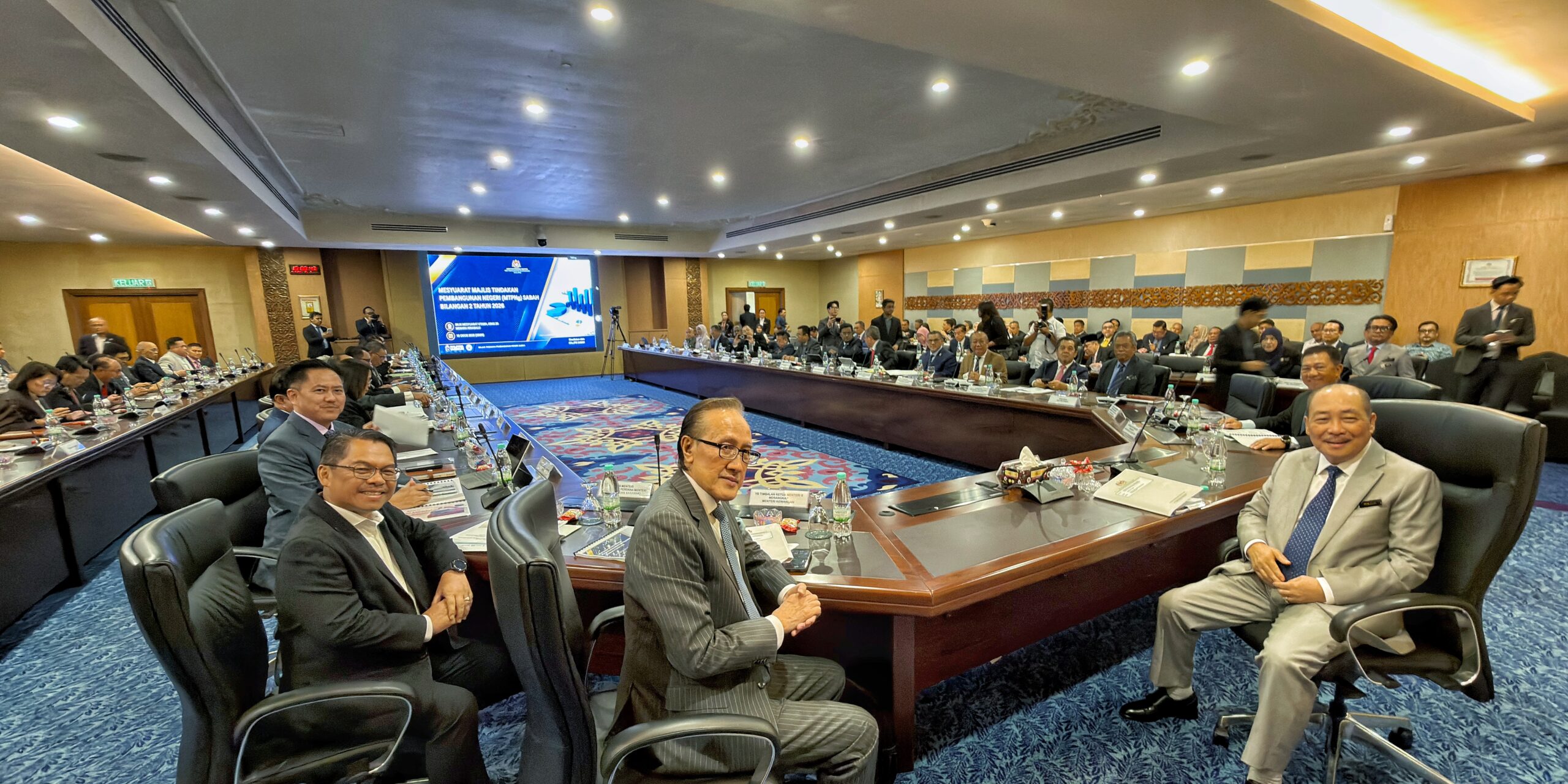
Hajiji with members of the MTPNg before the meeting.
KOTA KINABALU: Some of the issues affecting the people raised during the recent State Legislative Assembly sitting must be resolved quickly through the implementation of high-impact, low-cost “low-hanging fruit” projects, said Chief Minister Datuk Seri Haji Hajiji Haji Noor.
He said issues raised by State Assembly members during the sitting included the people’s basic needs, such as water and electricity supply, roads, flooding and drainage systems, education and other matters.
“All these issues are related to the people’s daily needs and some can be resolved through the implementation of ‘low-hanging fruit’ projects.
“I wish to reiterate the importance of implementing ‘low-hanging fruit’ projects as a strategic catalyst for Sabah’s development.
“While mega projects are important for long-term growth, these ‘low-hanging fruit’ projects can deliver immediate impact that the people and the government can feel within a shorter period,” he said.
Hajiji therefore called for all issues affecting the implementation of small projects to be resolved immediately to ensure that every project is completed according to schedule.
“The people have high expectations that they will be able to enjoy the benefits of development without any delay,” he said when chairing the State Development Action Council (MTPNg) meeting at Menara Kinabalu here today.
“I call on all ministries, departments and implementing agencies to further strengthen their commitment, enhance cooperation and improve strategic coordination to ensure that every development project is implemented efficiently, systematically and according to the stipulated schedule,” he said.
He said MTPNg meetings should be fully utilised as a platform for constructive, solution- and action-oriented discussions so that every implementation issue could be addressed proactively for the prosperity of the State and the well-being of the people.
Meanwhile, Hajiji said the State Government would remain committed to strengthening strategic cooperation with the Federal Government to ensure that every national development agenda was implemented more efficiently and effectively.
He said this was important to ensure that every policy, programme and development project translated into tangible benefits for the well-being of the people and the prosperity of Sabah.
“In line with the aspirations of Malaysia MADANI and the Sabah Maju Jaya 2.0 development direction, the implementation of development projects must continue to be strengthened through more systematic and integrated coordination among ministries, departments and implementing agencies.
“To realise these aspirations, all ministries, departments and implementing agencies must continue to strengthen inter-agency cooperation and communication while optimising the sharing of information and best practices.
“I am confident that through strong commitment and synergy, we will be able to ensure that every development project is completed, thereby accelerating Sabah’s progress while improving the well-being and quality of life of the people,” he said.
Also present were Deputy Chief Ministers Datuk Seri Dr Joachim Gunsalam and Datuk Seri Masidi Manjun, State Cabinet Ministers and Minister in the Prime Minister’s Department (Sabah and Sarawak) Datuk Ts Mustapha Sakmud.
The MTPNg meeting was also attended for the first time by newly appointed State Secretary Datuk Zainudin Aman, together with Sabah Federal Secretary Datuk Mohd Razali Wahab and Sabah Implementation Coordination Unit (ICU), Prime Minister’s Department Director Datuk Samsul Dollah.