


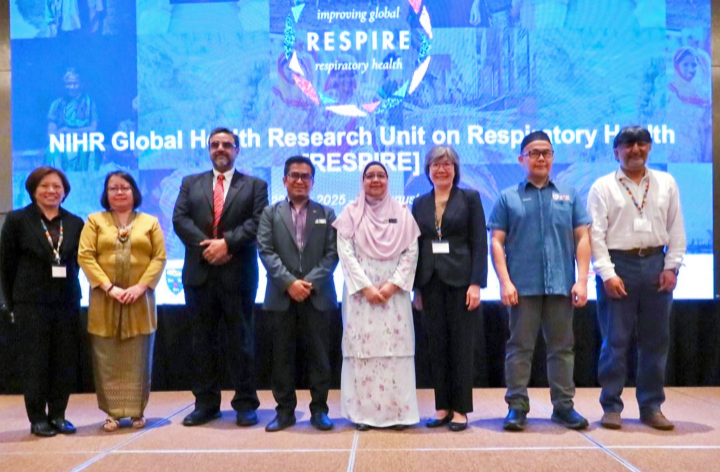
KOTA KINABALU: Leading respiratory health experts from across the globe have gathered in Kota Kinabalu this week to confront the growing burden of lung diseases in Asia, marking the first time Sabah plays host to the NIHR Global Health Research Unit on Respiratory Health’s (RESPIRE) Annual Scientific Meeting.
The four-day conference, which runs from 29 July to 1 August, brings together international researchers, policymakers and healthcare professionals to share research findings and deepen cross-country collaboration on respiratory health.
The meeting was officially opened today by Health Ministry’s Deputy Director-General of Health (Research) Datuk Dr Nor Fariza Ngah, who underscored the urgent need for enhanced strategies and investment to improve respiratory health in Malaysia and the wider region.
“Lung health remains a pressing issue in Malaysia, and we must ensure that research informs action, particularly in areas like Sabah which face unique public health challenges,” she said.
Lung diseases remain one of the top three causes of hospitalisation and death in Malaysia. National data reveals that 6% of adults and up to 13% of children live with asthma, with an estimated one-third of cases remaining undiagnosed. Chronic Obstructive Pulmonary Disease (COPD), another serious respiratory illness, affects approximately 6.5% of adults and costs the country an estimated RM2.3 billion annually.
Sabah in particular has the highest incidence of tuberculosis (TB) in the country, recording 161 cases per 100,000 people, posing significant pressure on the state’s health system.
To address these challenges, RESPIRE researchers are working closely with the Ministry of Health and Sabah Health Department to identify undiagnosed TB patients through a new clinical algorithm aimed at resource-limited primary care settings.
Globally, respiratory illnesses cause one in five deaths. While the COVID-19 pandemic has shone a spotlight on respiratory health, the conference emphasised that far more research is needed, particularly at local and regional levels, to inform effective healthcare policies and practices.
Sabah’s inclusion as host for this year’s meeting reflects the region’s critical role in addressing lung health challenges and the need for targeted investment and research.
The conference also aligns with Malaysia’s Healthy Lung Initiative 2025–2030 and the landmark resolution on lung health adopted at the recent 78th World Health Assembly. Malaysia was a key proponent of the resolution, which promotes an integrated approach to lung health, linking it to wider concerns including non-communicable diseases and climate resilience.
The resolution also urges global efforts to improve access to affordable care, advance clean air policies, and strengthen primary healthcare services as a frontline defence against respiratory diseases such as asthma, COPD, pneumonia, lung cancer and TB.
With collaborative initiatives like RESPIRE, experts hope evidence-based findings will empower policymakers to shape national strategies that reduce the burden of lung disease and improve quality of life across Asia and beyond.