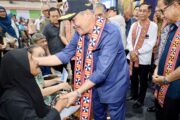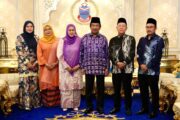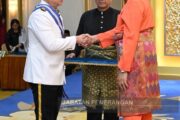


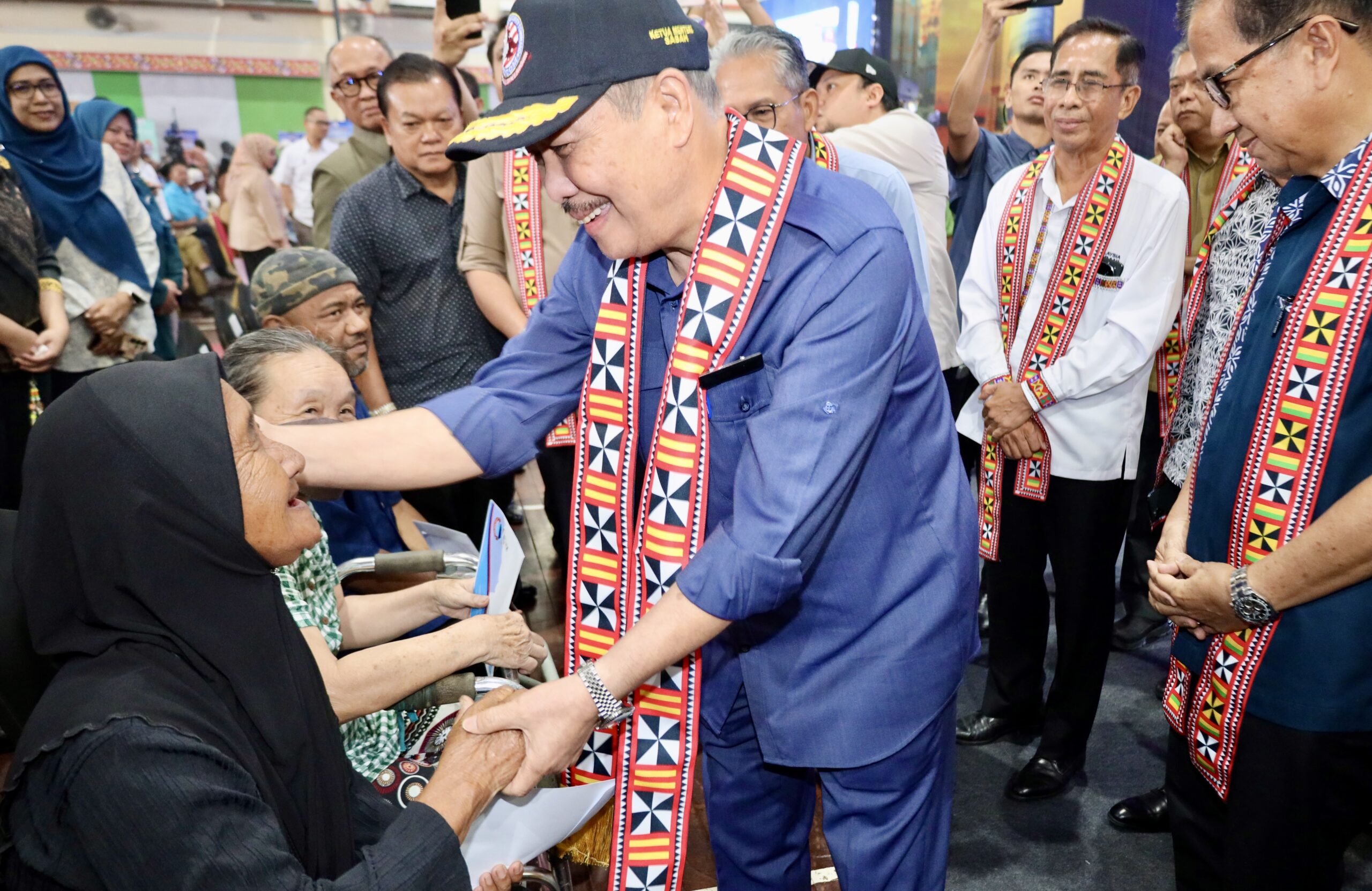
Hajiji presenting SYUKUR assistance to a person with special needs.
TUARAN: Sabah has successfully achieved zero hardcore poor household heads (KIR) from the figure recorded in January 2026, involving a total of 10,825 KIR, said Chief Minister Datuk Seri Haji Hajiji Haji Noor.
Based on eKasih data as of May 31, 2026, the number of hardcore poor KIR recorded in January this year has been reduced by 100 per cent through the implementation of various assistance interventions carried out in an integrated manner by the State and Federal Governments.
“This achievement demonstrates that a data-driven approach, the coordination of assistance through the Sabah State Database System (PADANS) and eKasih, as well as the implementation of targeted aid interventions, have successfully brought significant changes to the target groups.
“However, this achievement is not the end of our struggle. The State Government recognises that there are still people who require attention and assistance.
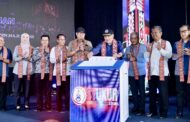
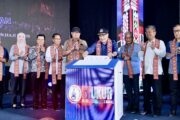
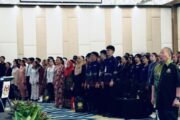
“Based on eKasih data as of May 31, 2026, a total of 57,710 household heads remain in the poor category compared to 70,298 in January 2026, representing a reduction of 17.9 per cent within four months,” he said when launching the Sentuhan Kasih Rakyat (SYUKUR) Outreach Programme for the Tuaran district at Dewan Sri Sulaman here today.
The Chief Minister said the overall number of individuals classified as poor had also recorded a significant decline.
According to him, the number of poor household heads and household members (AIR) fell from 743,939 people in January 2026 to 577,110 in May 2026.
Citing the Household Income and Basic Amenities Survey 2024 published by the Department of Statistics Malaysia (DOSM), Hajiji said Sabah’s absolute poverty incidence declined from 19.7 per cent in 2022 to 17.7 per cent in 2024.
Meanwhile, the incidence of hardcore poverty also showed a reduction, from 1.2 per cent in 2022 to 0.7 per cent in 2024, a decrease of 0.5 percentage points.
“Although Sabah still records the highest absolute and hardcore poverty rates in Malaysia, the decline in these incidence rates indicates that the various policies and development programmes implemented by the government are beginning to yield results,” he said.
Hajiji said achieving zero hardcore poverty in 2026 marks an important milestone in Sabah’s journey towards more inclusive social development.
“However, the real challenge that remains is reducing the State’s poverty incidence, which is still higher than that of other states.
“Therefore, SMJ 2.0 sets a clear direction to gradually reduce poverty incidence to levels closer to the national rate by 2030 through the implementation of more targeted, high-impact and sustainable development programmes,” he said.
The State Government is targeting Sabah’s absolute poverty incidence to be progressively reduced to around three to five per cent and hardcore poverty incidence to between zero and 0.1 per cent by 2030.
“To achieve this goal, the government will continue implementing the Sabah Poverty and Hardcore Poverty Eradication Programme, focusing on the provision of affordable housing, human capital development, job creation, skills enhancement, rural economic development and targeted financial assistance for those in need,” he said.
He added that the approach is in line with the State Government’s commitment to ensuring that the benefits of development are enjoyed fairly and equitably by all Sabahans regardless of location, background or economic status.
The State Government’s efforts to eradicate hardcore poverty are guided by five key intervention strategies.
The first is housing assistance through the provision of free homes under the Sabah Maju Jaya Friendly Housing Programme, the second is employment assistance through the MySMJ Kerja Programme, and the third is human capital and education assistance through 14 types of educational aid, including Sabah State Government scholarships and assistance from the Sabah Foundation and the Sabah Islamic Religious Council (MUIS).
The fourth intervention is welfare assistance focusing on non-productive groups such as senior citizens, bedridden patients and persons with disabilities (PwDs), while the fifth focuses on entrepreneurship and economic empowerment through programmes such as the People’s Income Initiative (IPR) and Sejahtera MADANI.
The Chief Minister said the State Government has placed poverty eradication as a key priority in the State’s development agenda.
“This reflects the State Government’s commitment to ensuring that no one is left behind in the nation’s development and that every citizen enjoys a better quality of life. In this regard, efforts initiated under the Sabah Maju Jaya (SMJ) 1.0 Development Plan are being continued and further strengthened through the SMJ 2.0 Development Plan,” he said.