

Arthur Sen
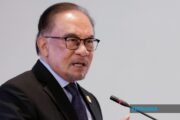
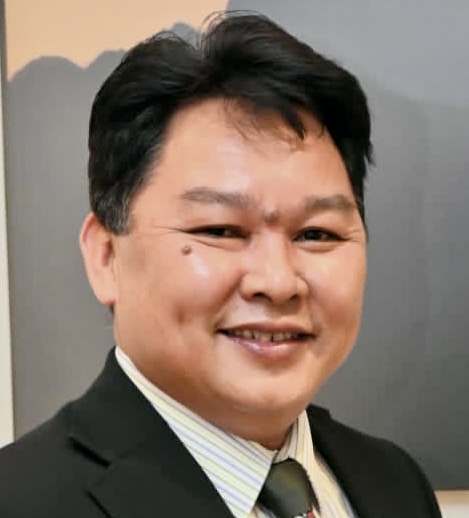
KOTA KINABALU: The process of implementing the Malaysia Agreement 1963 (MA63) did not begin with Parti Warisan Sabah (Warisan), while Sabah’s claim to 40 per cent of net revenue also did not originate from the party, said Parti Bersatu Sabah (PBS) Vice President Datuk Arthur Sen.
Arthur, who is also Political Secretary to Deputy Chief Minister I Datuk Seri Dr Joachim Gunsalam, said the historical record and chronology of MA63 needed to be clarified so that Sabahans could have an accurate understanding of what had been demanded, when the demands were made and what was subsequently agreed to or implemented.
“The MA63 process did not begin with Warisan. The claim to 40 per cent of net revenue did not originate from Warisan. The list of outstanding MA63 issues also did not originate from Warisan,” he said in a statement today.
He was commenting on several historical claims made by Datuk Mohd. Azis Jaman during a TikTok session with Abang Rock on Aug 18 regarding the implementation of MA63.
Arthur said that, in preparing the clarification, he had also sought the views of Philip Yaditing, who was directly involved in the research and study of MA63-related claims as a Special Duties Officer assisting Dr Maximus J Ongkili when he was Minister in the Prime Minister’s Department (Sabah and Sarawak Affairs).
According to him, the MA63 issue was first given formal attention and raised at Federal level during the administration of Prime Minister Datuk Seri Najib Tun Razak through the establishment of the Federal MA63 Committee, jointly chaired by Datuk Seri Anifah Aman and Datuk Nancy Shukri.
The committee identified and compiled various outstanding issues relating to MA63, including Sabah’s entitlement to 40 per cent of net revenue under Articles 112C and 112D of the Federal Constitution.
Arthur said that, at the Sabah State Government level, the Sabah MA63 Committee was established in 2016 and chaired by then Special Duties Minister Datuk Teo Chee Kang under the administration of Chief Minister Datuk Seri Musa Aman.
He said political parties and non-governmental organisations (NGOs) were invited to submit their respective demands relating to MA63, including PBS, which at the time was a component party of Barisan Nasional.
“The presentation on behalf of PBS was made by Datuk Joniston Bangkuai, Datuk Johnny Mositun and Philip Yaditing,” he said.
Among the issues presented by PBS were the implementation of Borneonisation and autonomous administration of the courts in Borneo, while the claim relating to Sabah’s 40 per cent net revenue entitlement was submitted by other NGO groups.
Arthur said the process took place before Warisan joined the Federal Government.
“Warisan subsequently continued with several issues and lists of demands that had already been identified, raised and documented through earlier MA63 processes.
“Of course, there is nothing wrong with any incoming government continuing the efforts and agenda of its predecessor. However, from the perspective of history, chronology and official records, it is inaccurate to portray these demands as the exclusive rights or initiatives of Warisan,” he said.
He also stressed the need to distinguish between the process of negotiations or discussions and actual implementation.
He said that throughout Warisan’s involvement in the Federal Government, the matters discussed did not reach the implementation stage, with most remaining at the stages of negotiations, discussions and agreement to be studied or taken to the next level.
Following the political change in 2020, Dr Maximus was appointed Minister in the Prime Minister’s Department (Sabah and Sarawak Affairs) under the Federal Government led by Tan Sri Muhyiddin Yassin.
Arthur said that, with the cooperation of the Sabah Government under Chief Minister Datuk Seri Haji Hajiji Haji Noor and the Sarawak Government under Premier Tan Sri Abang Johari Openg, several matters relating to MA63 were successfully implemented.
These included the transfer of regulatory powers over liquefied petroleum gas (LPG) to the Sarawak Government, amendments to Articles 1(2) and 160(2) of the Federal Constitution, strengthening the Sabah Government’s powers over licensing and deep-sea fisheries, the transfer of administrative authority over Pulau Sipadan and Pulau Ligitan to the Sabah Government, as well as the Special Grant under Articles 112C and 112D through interim payments.
At the same time, several other matters continued to be pursued through MA63 negotiations, including oil royalties and petroleum cash payments, petroleum resources and oil fields, the Territorial Sea Act 2012, state rights over the continental shelf, Federal financial responsibilities, Borneonisation, increased parliamentary representation, regulatory powers over gas and electricity in Sabah, state powers relating to health, labour matters and judicial administration in Sabah and Sarawak.
Other matters discussed included cross-border trade and security between East Malaysia and Kalimantan, infrastructure development linked to Indonesia’s relocation of its capital to Nusantara, strengthening Customs, Immigration, Quarantine and Security (CIQS) facilities, as well as immigration issues involving IMM13, Burung-Burung Cards and Census Cards.
Meanwhile, Arthur said the role of Finance Minister Datuk Masidi Manjun in negotiations concerning Sabah’s 40 per cent net revenue entitlement should also be recognised.
He said Masidi led negotiations with the Federal Ministry of Finance and the Federal Government team, contributing to interim payments to Sabah, beginning with RM125.6 million in 2022 and RM126.8 million in 2023, followed by RM300 million in 2024, RM600 million in 2025 and RM1.5 billion in 2026.
“For the record, during the Warisan administration, only RM52 million was successfully claimed as an interim payment. However, the payment was never implemented,” he said.
On the amendment to Article 1(2), Arthur said the proposed amendment tabled by then Law Minister Datuk Liew Vui Keong, who was also a Warisan MP, failed to secure the required two-thirds majority in Parliament.
He said the proposal also did not receive the support of Sarawak MPs, partly because it did not expressly include a reference to MA63 in the Federal Constitution.
In contrast, the subsequent amendment carried out when Dr Maximus was Minister in the Prime Minister’s Department and Datuk Seri Dr Wan Junaidi Tuanku Jaafar was responsible for legal affairs was successfully passed by Parliament in 2022 with more than a two-thirds majority.
Of the 222 MPs, 200 supported it at the first reading while 199 supported it at the second reading.
Arthur said the 2022 amendment not only restored the position of Sabah and Sarawak under Article 1(2), but also inserted a clear reference to MA63 into the Federal Constitution.
He said the amendment differed from the earlier proposal and strengthened the constitutional basis for understanding the position of Sabah and Sarawak within the Federation of Malaysia.
Arthur also stressed that PBS had included Sabah’s rights under MA63 in its agenda and manifesto and had consistently fought for those rights since the party’s establishment.
“The struggle to defend Sabah’s constitutional position and rights under MA63 has been part of PBS’ political history for decades,” he said.
He said Sabahans had the right to know the full chronology of the MA63 process, including what was demanded, when the demands were made, who raised them, what was agreed to be discussed, what was actually agreed upon and what was ultimately implemented.
“MA63 does not belong to any political party. It is a constitutional commitment arising from the formation of Malaysia, and the rights of Sabah and Sarawak belong to their people.
“The appropriate approach is not to compete for political credit, but to recognise the contributions of those who worked on these issues before and, more importantly, to continue efforts to ensure that Sabah’s outstanding rights under MA63 are fully realised and implemented,” he said.