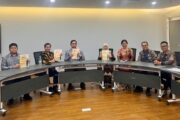


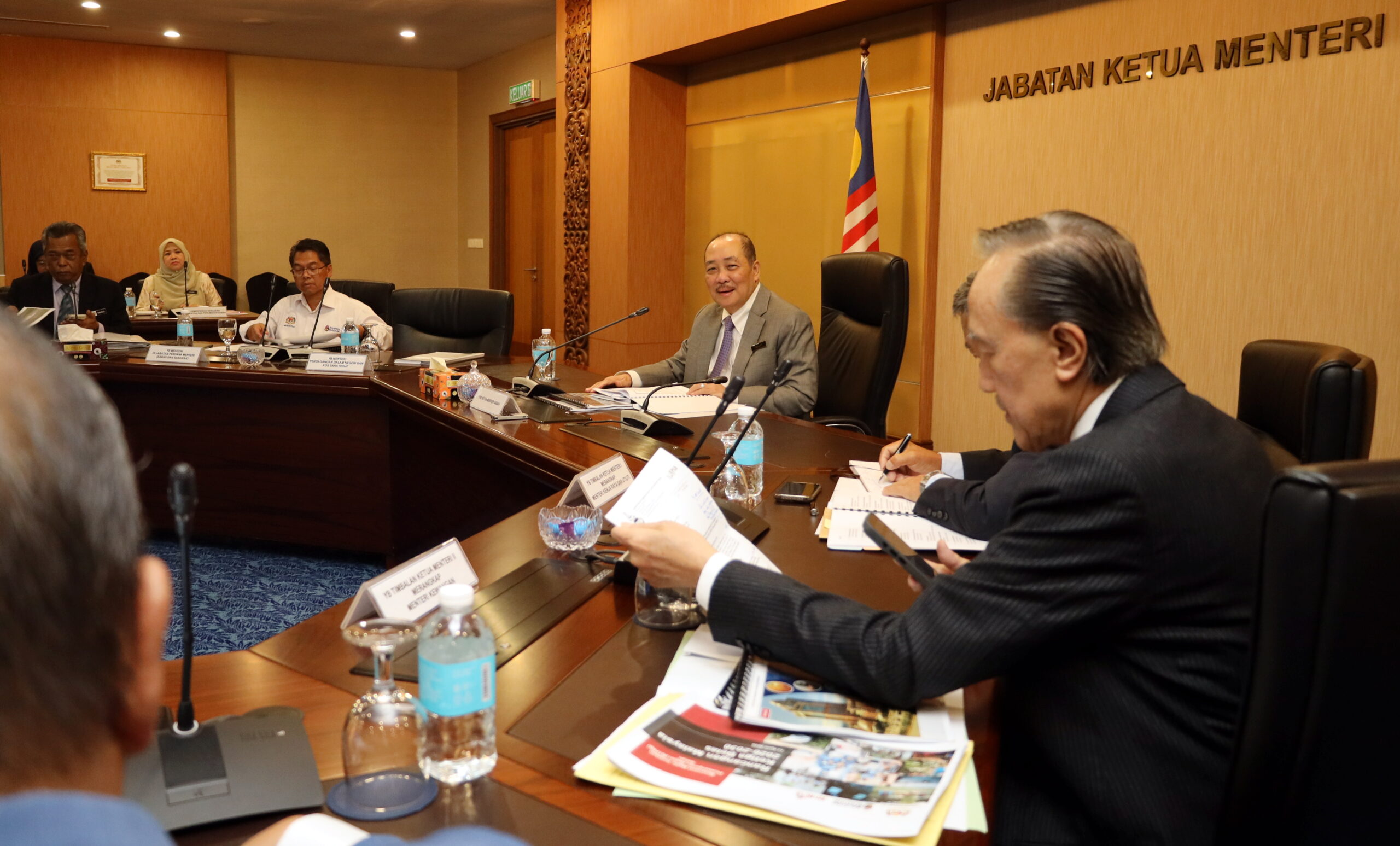
Hajiji chairing the first State Development Action Council meeting of the year at Menara Kinabalu today.
KOTA KINABALU: Chief Minister Datuk Seri Haji Hajiji Haji Noor has called for priority to be given to urgent projects as well as those that can be implemented immediately and deliver quick benefits to the people, particularly in education and healthcare.
Citing the MyProjek report, he said Sabah has been allocated RM6.59 billion under the 13th Malaysia Plan (13MP), covering 1,233 projects and programmes, reflecting the Government’s commitment to ensure the state continues to progress in line with the aspirations of the MADANI Government and Hala Tuju Sabah Maju Jaya (SMJ) 2.0.
“I also want more frequent monitoring of development projects to avoid delays.
“Issues and challenges in implementation must be examined and referred to the appropriate channels, including central agencies and the State Government, especially when they involve funding, land and utilities,” he said when chairing the State Development Action Council (MTPNg) meeting at Menara Kinabalu here today.
Hajiji said Prime Minister Datuk Seri Anwar Ibrahim, during the Kota Kinabalu District Development Meeting on March 15, had stressed the need for immediate implementation of small-scale “low-hanging fruit” projects that can deliver quick impact.
“These projects must be carried out efficiently, swiftly, according to schedule and with full integrity so that the people of Sabah can benefit without delay.
“It is unacceptable for such projects to be delayed or become ‘sick’, often due to local issues such as land ownership and utilities,” he said, urging implementing agencies to closely monitor their progress.
He added that the Hardcore Poverty Eradication Programme for Sabah 2026 is an aggressive continuation of the SMJ development agenda.
“In 2026, the State Government launched SMJ 2.0 (2026–2030), which places poverty eradication as a key pillar to ensure no one is left behind,” he said.
With a record-high state budget of RM12.02 billion for 2026, Hajiji said a significant portion has been allocated to basic infrastructure such as water supply, electricity and roads to spur economic activities across all districts.
He said the Government has also implemented various initiatives to improve quality of life and strengthen the social safety net for vulnerable groups, including the Sentuhan Kasih Rakyat (SYUKUR) programme.
“The success of the SMJ 1.0 Development Plan has given us confidence that we are on the right track.
“SMJ 2.0 is a continuation that requires ongoing transformation, including changes in mindset, work culture and the creation of new value for the people,” he said.
Hajiji said under SMJ 2.0, the State Government continues to focus on three main sectors – agriculture, industry and tourism – while ensuring sustainable economic growth, strengthening human capital and people’s wellbeing and enhancing infrastructure and green connectivity.
He added that this includes accelerating solutions to long-standing issues involving water supply, electricity and road networks, particularly the Pan Borneo Highway.
Hajiji stressed that reporting on delayed projects during the meeting is crucial to ensure implementation issues are resolved within the stipulated timeframe.
“The State Government takes this matter seriously as delays will lead to increased costs and losses,” he said.
As Chairman of the MTPNg, he urged all relevant parties to remain committed to addressing project delays, especially those involving “low-hanging fruit” initiatives that can deliver immediate and high impact to the people.