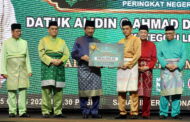


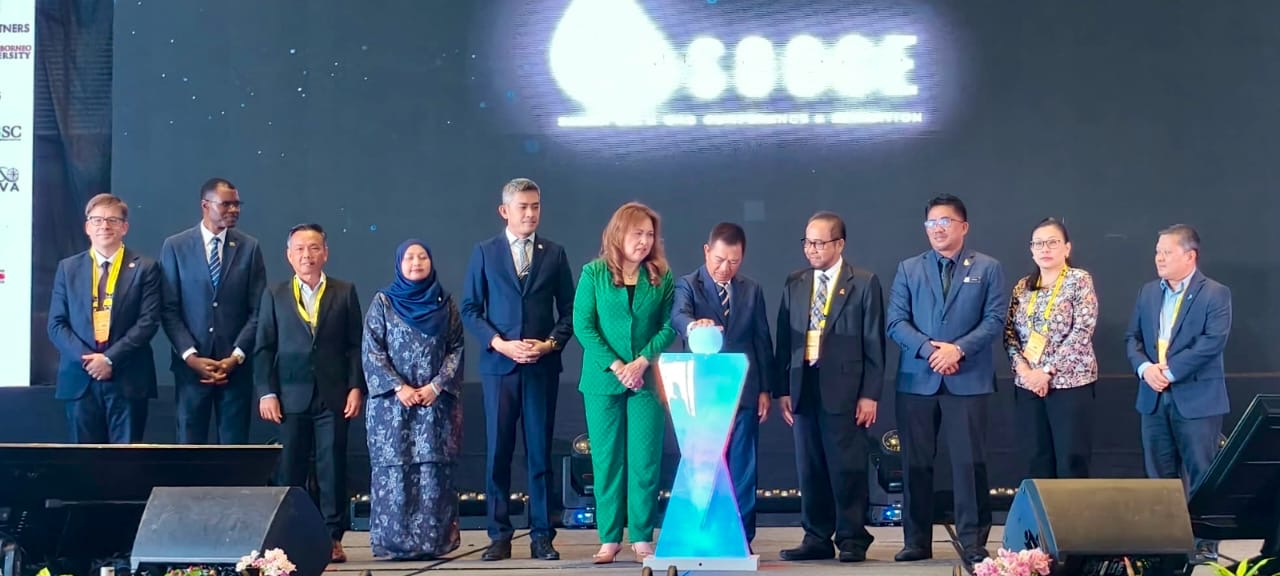
Dr Joachim officiating at the opening of SOGCE 2026.
KOTA KINABALU: The Sabah Government has reaffirmed its commitment to creating an environment that supports sustainable investment, business growth and industry competitiveness as the state positions itself to play a greater role in Malaysia’s evolving energy landscape.
Deputy Chief Minister I Datuk Seri Dr Joachim Gunsalam said the State Government remains focused on strengthening infrastructure, enhancing governance, developing skilled human capital and fostering strategic partnerships to ensure long-term growth in the energy sector.
He said the commitment aligns with the Hala Tuju Sabah Maju Jaya (SMJ) development agenda, under which the energy sector continues to be a key driver of economic growth, industrial expansion and job creation.
“The Sabah Government is committed to creating an environment that supports sustainable investment, business growth and industry competitiveness through strong infrastructure, efficient governance, skilled human capital and strategic partnerships,” he said when officiating at the opening of the 13th Sabah Oil, Gas & Energy Conference & Exhibition 2026 (SOGCE 2026) at Sabah International Convention Centre (SICC) here today.
Dr Joachim, who is also Works and Utilities Minister, said the global energy sector is undergoing unprecedented transformation driven by rising energy demand, rapid technological advancement, shifting market dynamics, geopolitical developments and increasing environmental considerations.
He said these changes are reshaping how nations produce, distribute and consume energy, while making energy security more critical than ever.
“Reliable and affordable energy remains fundamental to economic growth, industrial development and societal well-being,” he said.
Despite the challenges brought about by the evolving energy landscape, Dr Joachim said Sabah is well positioned to seize new opportunities and strengthen its role as a key contributor to Malaysia’s energy future.
He noted that Sabah’s abundant natural resources, strategic geographical location and growing industrial capabilities continue to attract investment and support economic development.
“Our oil and gas resources continue to play a significant role in supporting economic development and attracting investment. At the same time, we are exploring new opportunities in renewable energy and sustainable technologies that will contribute towards a more diversified and resilient energy ecosystem,” he said.
Dr Joachim stressed that innovation and technological advancement would play a decisive role in shaping the future of the energy industry.
He said technologies such as artificial intelligence (AI), automation, digitalisation and advanced analytics are transforming industry operations by improving efficiency, enhancing safety, reducing environmental impact and creating new opportunities across the energy value chain.
“The ability to adopt and leverage these technologies will determine the competitiveness of industries and economies in the years ahead.
“Sabah must continue embracing innovation and technological advancement while creating opportunities for local businesses and talents to participate meaningfully in this evolving landscape,” he said.
He also underscored the importance of human capital development as the industry navigates energy transition and digital transformation.
“The energy transition requires a workforce equipped with new skills, technical expertise and digital capabilities. Our young people must be prepared not only to meet the demands of today’s industry but also to lead the industries of tomorrow,” he said.
According to him, investments in education, technical and vocational training, research and development, as well as industry-academia collaboration, will be essential in building a future-ready workforce.
“The future of energy is ultimately about people. It is about creating opportunities, developing talent, improving livelihoods and ensuring that the benefits of growth are shared by all,” he said.
Dr Joachim also welcomed international delegates, diplomatic representatives and industry leaders attending SOGCE 2026, saying their presence reflected growing confidence in Sabah’s economic potential and increasing international interest in the state’s energy sector.
He said international cooperation, knowledge exchange and strategic partnerships are becoming increasingly important in addressing global challenges and unlocking new opportunities for sustainable development.
The two-day conference brings together policymakers, investors, experts and industry players to discuss key issues including energy security, digital transformation, artificial intelligence, decarbonisation, carbon management, renewable energy integration, investment opportunities and talent development.
Dr Joachim said the success of SOGCE should ultimately be measured by the partnerships forged, investments generated, innovations developed and opportunities created beyond the conference itself.
“Together, we can build a more resilient, innovative and sustainable energy future for Sabah, Malaysia and the wider region,” he said.
Earlier, he congratulated Midas Events Management and the organising committee for successfully organising SOGCE for the 13th consecutive year, describing it as Sabah’s premier oil, gas and energy platform and an important catalyst for collaboration, innovation and investment.
“The Sabah Government values initiatives such as SOGCE, which contribute significantly towards knowledge sharing, business development, talent cultivation and economic growth,” he said.