


Mohamed Nazim Maduarin
KOTA KINABALU: The Sabah Law Society (SLS) has filed legal proceedings in the High Court of Sabah and Sarawak at Kota Kinabalu against the Malaysian Government to protect the constitutional safeguards guaranteed to Sabah and Sarawak under the Federal Constitution and the Malaysia Agreement 1963 (MA63).
SLS said the case seeks to ensure that any move to declare the Bahasa Malaysia version of the Federal Constitution as the authoritative text is carried out strictly in accordance with constitutional procedures.
The Society maintained that such a declaration cannot take effect without following the amendment process under Article 159 of the Federal Constitution, obtaining the consent of Sabah and Sarawak as required under Article 161E(2), and respecting the supremacy clause enshrined in Article 4(1).
SLS stressed that the legal action is not directed against Bahasa Malaysia as the national language, which is firmly recognised under Article 152, but rather concerns the need to preserve constitutional integrity and due process.
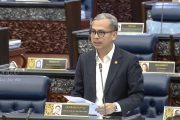
“The issue here is not about language—it is about the constitutional process,” said SLS President Datuk Mohamed Nazim Maduarin in a statement today.
“We fully respect Bahasa Malaysia as our national language, but any declaration making its version of the Constitution authoritative must follow the proper constitutional path and obtain the necessary consent of Sabah and Sarawak.”
He said the Society was deeply concerned that bypassing the prescribed procedures could alter the legal meaning of key provisions affecting religion, language, and native rights in Sabah and Sarawak, thereby undermining the safeguards promised when the two States joined Malaysia in 1963.
The move follows a separate case filed in the High Court of Malaya in Kuala Lumpur seeking a declaration that the Bahasa Malaysia text of the Constitution is already authoritative.
SLS pointed out that several material differences exist between the English and Bahasa Malaysia versions of the Federal Constitution. One notable example is Article 12(4), where the English version requires the consent of both parents in matters relating to a minor’s religion, while the Bahasa Malaysia version uses wording that could be interpreted to allow only one parent to decide.
“These discrepancies could affect settled legal interpretations and the rights of citizens if the Bahasa Malaysia text were made authoritative without proper harmonisation,” said Mohamed Nazim.
He emphasised that the legal action is not aimed at the Yang di-Pertuan Agong nor intended to question His Majesty’s prerogatives under Article 160B.
“On the contrary, this case seeks to protect the Federal Constitution’s supremacy and ensure that His Majesty is not placed in a position where any prescription made under Article 160B could later be challenged as unconstitutional,” he said.
According to SLS, the case is fundamentally about upholding the proper amendment process under Article 159, safeguarding the special protections under Article 161E and MA63, and ensuring that Sabah and Sarawak’s constitutional position remains secure within the Federation.
Mohamed Nazim added that SLS supports harmonisation of both language versions of the Constitution, but insists that it must be conducted transparently and with full public and parliamentary awareness.
“This process should identify and reconcile all material differences and, where necessary, amend the Constitution with the consent of Sabah and Sarawak. Only through such transparency can we preserve public confidence in the rule of law,” he said.
The SLS Legal Team handling the matter is led by Immediate Past President Datuk Roger Chin.
Mohamed Nazim stressed that the case was filed in the public interest, noting that its outcome will have far-reaching implications for constitutional interpretation, the preservation of Sabah and Sarawak’s special position, and the protection of the rule of law across Malaysia.