


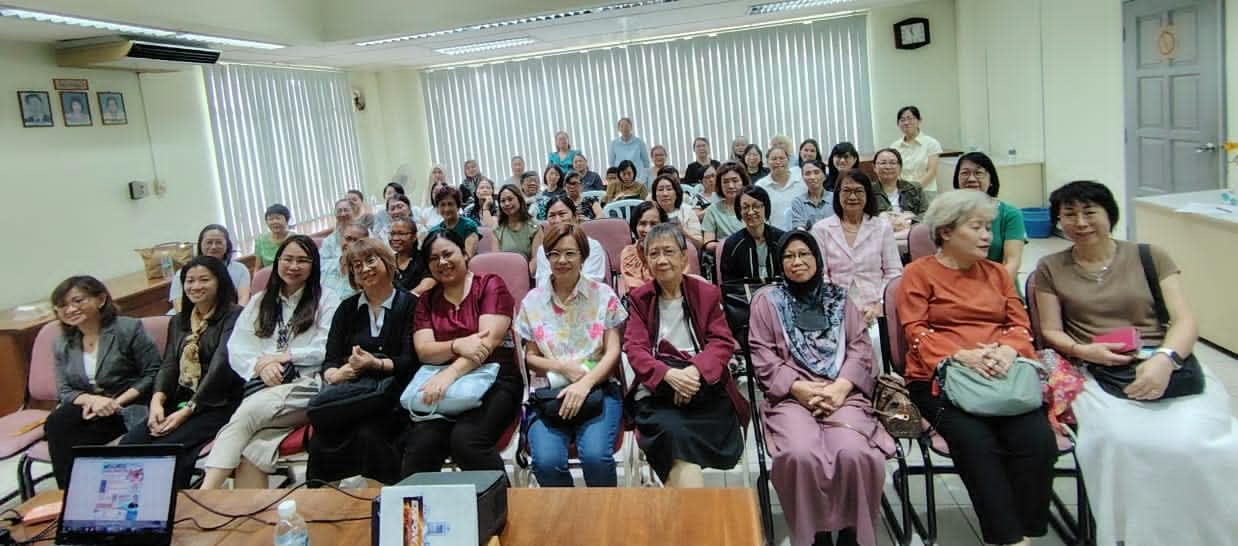
Women attending the talk at the SFPA Headquarters’ Conference Room.
KOTA KINABALU: Women have been urged to undergo regular mammogram screening to detect breast cancer early and safeguard their health.
Consultant Obstetrician and Gynaecologist Dr Felice Huang gave the advice during a question-and-answer session following her talk on “My Menopause, My Strength: Embracing Change After 40”, recently.
“Go for it. Don’t be afraid. With the advent of new machines, the pain of undergoing a mammogram today is less than what was experienced previously. It’s fleeting pain. It will pass, so don’t give up,” she assured some 70 women present.
She was responding to a participant who expressed fear of going for her next mammogram screening due to the unbearable pain she experienced when two metal plates were used to compress the breast during the X-ray examination.
“It is painful. I have seen women in tears as they emerged from the mammography room,” the participant recalled.
A mammogram is an X-ray examination of the breast used to detect early signs of breast cancer.
Earlier, Dr Huang explained the three stages of the menopause journey, noting that many women were still unclear about the changes they experience during this phase of life.
She said perimenopause is the stage when periods may become irregular, while symptoms such as hot flushes and changes in sleep may begin.
Menopause is reached after 12 months without a period, provided there is no other cause, while post-menopause refers to the years following the final period, during which heart and bone health remain important.
Dr Huang outlined five key takeaways for women going through perimenopause, menopause and post-menopause.
She said menopause is a normal stage of life and women do not have to suffer in silence, as symptoms are real, varied and treatable.
Lifestyle measures can support lifelong health, while both hormonal and non-hormonal therapies have their place in managing symptoms.
She stressed that the best treatment plan should be evidence-based, personalised and reviewed over time.
According to Dr Huang, most women experience natural menopause between the ages of 45 and 55, when the ovaries gradually produce less oestrogen as their egg supply declines.
Menopause before the age of 45 is known as early menopause, while symptoms or absent periods before 40 warrant medical assessment for premature ovarian insufficiency (POI).
“Do seek professional advice if periods stop unusually early,” she said, adding that surgery to remove both ovaries and certain cancer treatments could also bring on menopause earlier.
As menopause can accelerate bone loss, women were advised to take care of their bones and heart by staying physically active, avoiding smoking and limiting alcohol consumption.
Participants also raised questions about the safety of Menopausal Hormone Therapy (MHT).
Dr Huang clarified that MHT is the most effective treatment for healthy women below 60 experiencing troublesome hot flushes and night sweats that affect their daily lives, although risks must also be considered.
She said MHT could be administered through tablets, patches, gels or sprays, depending on a woman’s health and preferences.
She explained that combined systemic MHT, comprising oestrogen and progestogen, could increase breast cancer risk, with the risk varying according to the duration and treatment regimen.
Oestrogen helps relieve hot flushes and prevent bone loss, but oral oestrogen in tablet form carries a higher risk of venous blood clots than transdermal oestrogen administered through skin patches or gels.
Women who still have their uterus generally require adequate progestogen alongside systemic oestrogen to protect the endometrium or womb lining, while oestrogen alone is usually appropriate following a total hysterectomy.
Dr Huang further cautioned that women with a history of breast cancer, blood clots, stroke, unexplained vaginal bleeding or liver disease require specialist consideration before deciding on MHT.
The talk was organised by the Sabah Family Planning Association (SFPA) and supported by the Sabah Council of Social Services (MPMS) at the association’s headquarters in conjunction with Welfare Month 2026.
Also present were MPMS Executive Secretary Joeanne Lee, SFPA President Mary Koh and Exco members.