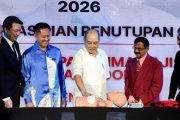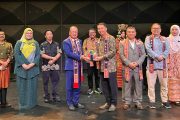


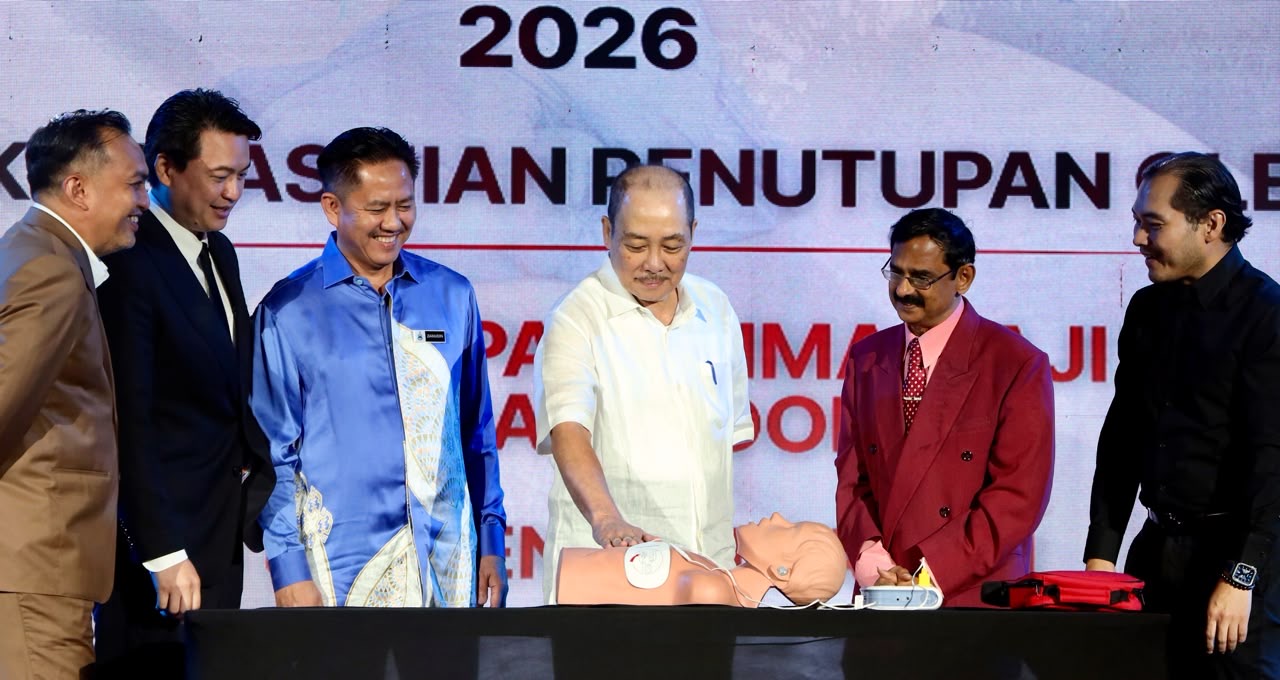
Hajiji performing the closing ceremony gimmick for the course.
KOTA KINABALU: Chief Minister Datuk Seri Haji Hajiji Haji Noor has called for the establishment of a hospital that would serve as a Trauma Treatment and Rehabilitation Centre, while also functioning as a premier training centre for pre-hospital emergency services in Sabah.
He said action must be taken to address shortages, particularly in workforce and ambulance equipment, throughout Sabah, in both urban and remote areas, to ensure pre-hospital and ambulance services can deliver high-quality and effective emergency care.
Based on data from the Department of Statistics Malaysia (DOSM), ischaemic heart disease remained the leading cause of death in the country, including Sabah, followed by cerebrovascular diseases (stroke) and road accidents, he said.
Statistics from the Sabah State Health Department (JKNS) also showed an increasing trend in emergency calls made through the 999 hotline in the State, from 14,256 calls in 2024 to 15,434 in 2025, while 10,154 calls were recorded as of September this year, he said.
“When we talk about emergency treatment, the operation of pre-hospital and ambulance services plays an important role as part of the continuum of healthcare for the community, ensuring prompt and rapid response times,” he said when officiating at the closing ceremony of the First Responder Life Support (CPR) and Fitness Course 2026 at Menara Kinabalu here today.
Hajiji said trained first responders in the community play a crucial role while awaiting the arrival of ambulances and pre-hospital emergency teams.
“Swift, accurate and effective early intervention can not only reduce the risk of complications but also save lives.
“Therefore, efforts to train more first responders and establish skilled teams that are prepared to handle emergencies and unforeseen situations are essential to reducing fatalities,” he said.
According to the 2020 Malaysia Population and Housing Census, Sabah had a population of approximately 3.4 million spread across a vast geographical area, with a relatively low average population density of 46 people per square kilometre.
Given these circumstances, he said survival during the critical first few minutes of an emergency depended heavily on members of the public and trained community first responders being able to initiate cardiopulmonary resuscitation (CPR).
Hajiji said the inaugural course, which included personal escorts to Ministers, Assistant Ministers, Members of Parliament, State Assemblymen and officers from the Chief Minister’s Department, was timely.
“This is a commendable initiative that should be continued regularly and extended to all personal escorts of elected representatives who serve the people on the ground,” he said.
He congratulated the organising committee, led by Datuk Dr G Mohan A Gopal Naidoo, in collaboration with the Sabah State Legislative Assembly, for organising the programme.
“I hope this course will not only inspire personal escorts who have yet to undergo such training but also serve as an example for State Legislative Assemblies throughout Malaysia,” he said.
Meanwhile, Hajiji also urged every State Assemblyman to utilise part of their allocations to train and establish skilled emergency response teams capable of handling emergencies and unforeseen situations in their respective constituencies.
He said this was in line with the aspirations of the Sabah Maju Jaya (SMJ) Development Roadmap to ensure the well-being and safety of the people.
“More members of the public must be trained as first responders to achieve the target of ‘One First Responder in Every Family’,” he said.