

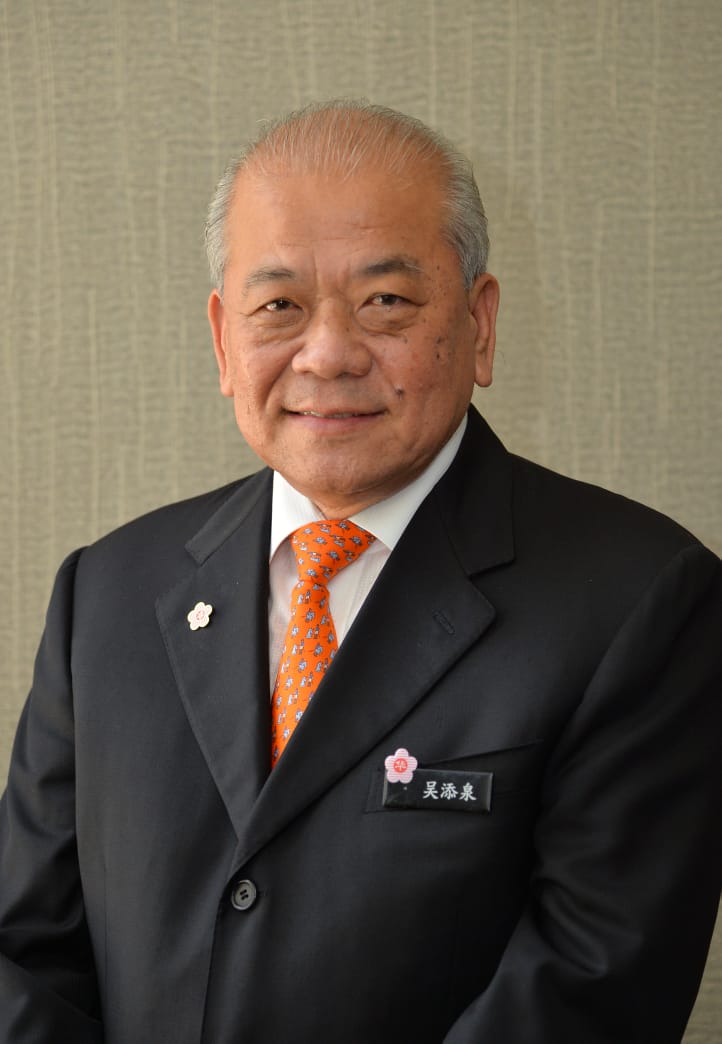
T C Goh
KUALA LUMPUR: The Federation of Chinese Associations Malaysia (Huazong) welcomed the Government’s allocation of RM64.1 billion for the Education Ministry in Budget 2025, the highest in history, with RM2 billion specifically for upgrading and maintenance purposes, Chinese schools included.
Its President Tan Sri T C Goh however hopes that the budget will clearly specify allocations for various types of schools.
While expressing support for the Government’s announcement that 44 new schools will be built next year, he was nonetheless puzzled that the budget only mentioned the construction of national secondary and primary schools, with no mention of new Chinese or other vernacular schools.
“Does this mean there will be no new Chinese schools or relocation plans for next year?” he questioned.
He was also puzzled that the budget did not mention allocations for Chinese independent secondary schools or national-type Chinese secondary schools (SMJK).
He noted that, compared to this year, the Government’s allocation for the education sector has increased, from RM58.7 billion to RM64.1 billion (an increase of 9.2%). The allocation for upgrading and maintenance of schools has also increased to RM2 billion, which is encouraging.
Goh was commenting on the third national “Madani Budget” presented by Prime Minister cum Finance Minister Datuk Seri Anwar Ibrahim in Parliament. He noted that this is the largest and most challenging budget in the nation’s history, presented in the face of RM1.5 trillion in national debt during Anwar’s two-year leadership.
Goh, who is also President of the Federation of Chinese Associations Sabah (FCAS), expressed concern over the Government’s plan to progressively expand the scope of the Sales and Services Tax (SST) starting next May under its tax base expansion initiative.
He hopes the Government will clarify the industries involved and the tax rates, and that it will gather input from relevant stakeholders to ensure the measures remain affordable for the affected sectors.
On the Prime Minister’s remark that financial services will be subject to SST, Goh believes that financial services are essential to people’s daily lives and are regulated by the Government or Bank Negara Malaysia. Therefore, they should support the Government in implementing higher corporate social responsibility.
“If the tax is to be imposed, the rate should not be too high; a rate of 8pc would be unacceptable,” he said.
On the restructuring of RON95 petrol subsidies in mid-2025, Goh pointed out that more people use petrol than diesel in Malaysia. Therefore, the Government should draw lessons from its diesel subsidy measures this year, to ensure that the subsidy benefits the right groups and is not misused. He also suggested that the Government continue to provide petrol subsidies for East Malaysians, as it does for diesel.
He noted that the budget’s provision of a 50pc additional tax relief, for one year, for employers who rehire female workers will encourage women to return to the workforce. Additionally, the RM650 million allocated to support women and youth entrepreneurship will help improve household incomes and boost social productivity.
Goh also expressed support to the Government for raising the stamp duty exemption limit for microloans or financing from RM50,000 to RM100,000 next year, as well as the RM3.2 billion in microloans provided by TEKUN Nasional and Bank Simpanan Nasional, which will help the disabled, Chinese and Bumiputera small businesses. He further acknowledged the RM6.4 billion financing fund from the Malaysian Development Bank (MDB) to support infrastructure development, digitization, tourism, logistics, renewable energy, and traditional energy initiatives, noting that these measures can strengthen the development and growth of small and medium enterprises (SMEs) and micro-enterprises.
Goh acknowledged that the RM421 billion allocated in this budget is the highest in history, including the increased allocation of RM335 billion for administrative expenses, while the development expenditure has been “sacrificed” and reduced to RM86 billion (excluding the RM2 billion emergency reserve fund), thus further widening the imbalance between the two.
He noted that the country has been facing a budget deficit since 1998, and next year’s budget will mark the 27th consecutive deficit year. This indicates that the national debt has doubled in the past decade and shows that the country has experienced more than one-third of its post-independence years in deficit.
He thus urged the Government to exercise greater political will, work hard, and strive towards a balanced and surplus budget, instead of continuing to expand debt.
He said the substantial salary adjustments for 1.6 million civil servants are one of the reasons for the increased administrative expenses next year. Along with the pensions for retired civil servants, this will place long-term financial pressure on the government. He suggested that the Government should make a firm decision to trim the size of the public services.
He acknowledged that the consolidation of overlapping government agencies to improve efficiency announced in this budget is a timely and wise move, adding that this approach could also be applied to the operation of the public service system to gradually reduce manpower.
Goh acknowledged that the Government has continued to care for the middle and lower-income groups and families in next year’s national budget, providing many subsidies and benefits. He recognised the rationale behind targeted subsidies aimed at benefiting the general public.
He also hopes that the Government will continue to enhance its execution capabilities and adopt more stringent financial management and austerity measures, while relying on the private sector to stimulate domestic demand and adjust strategies, as necessary, to achieve national economic growth goals.
He also described the 2025 Budget as a ‘painless’ budget and without too many surprises.
“For the Government to lead the people towards robust economic growth, concerted efforts from businesses, the people, and the government are required,” he asserted.
Goh also expressed agreement and great appreciation for Anwar’s quotation of Confucius’ Analects: “To make a mistake and not correct it is a real mistake.” during the budget presentation.
“According to Confucius, the real error lies in repeating the same mistakes, which is the root cause of a vicious cycle that leads to failure. This philosophy applies not only to the nation but also to individuals,” he said.