

T C Goh
KUALA LUMPUR: The Federation of Chinese Associations Malaysia (Huazong) has hoped that under the leadership of the Unity Government, and the collective efforts of all Malaysians, there will be greater political stability in Malaysia to drive economic growth in various sectors.
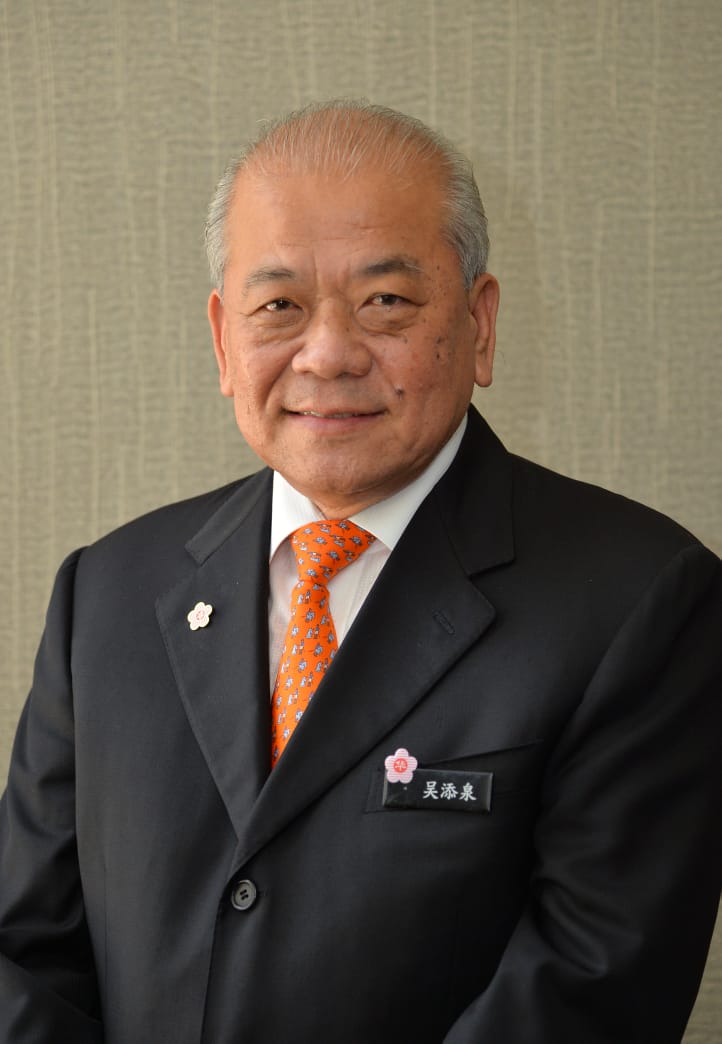
Its President, Tan Sri T C Goh opines that this is especially crucial for Malaysia, as it will usher in a “Year of International Diplomacy”, when it takes over the 2025 Chairmanship of the Association of Southeast Asian Nations (ASEAN) next year, where it will be hosting international summits and receiving frequent visits from leaders of various countries within ASEAN.
He acknowledged that with the Malaysian ringgit appreciating to become one of the best-performing currencies in the region, the nation achieving a strong 5.9 per cent growth in GDP, in the second quarter of this year, and the World Bank raising Malaysia’s economic growth forecast for this year (from 4.3pc to 4.9pc), these positive developments undoubtedly bode well for the country’s economic growth and prospects next year.
However, he also noted that given the ongoing global economic instability due to factors such as the U.S. elections, wars, and geopolitical disputes, Malaysia and the region still face numerous challenges.
“The Government must tread cautiously, make well-considered decisions, and lead the country towards prosperity through clean governance and prudent financial management,” he said.
He emphasised that efforts to reduce national debt through revenue generation and cost-saving measures are critical, especially given the continuous years of deficit budgets, where administrative expenditure exceeds development expenditure—a persistent imbalance that has yet to see significant improvement.
In a statement today which focuses on Huazong’s outlook on the national budget for next year, Goh expressed high expectations for the budget to be tabled in Parliament by Prime Minister cum Finance Minister Datuk Seri Anwar Ibrahim on Oct 18.
He hopes the Government will continue to take care of all communities comprehensively in this budget, including the Chinese community in areas such as Chinese education, Chinese organisations, and non-profit welfare organisations.
Goh also hopes the Government will continue to implement business-and-people-friendly policies, strengthen administrative and systemic reforms, enhance the resilience, flexibility, and sustainability of the economy, and ensure that the country maintains a good growth trajectory.
Huazong has compiled the following 25 proposals, covering various sectors, for the national budget next year:
* As Malaysia becomes the ASEAN Chair next year, hosting international summits and welcoming leaders from many countries, it will usher in an important “Year of International Diplomacy”. The government must strive to maintain political stability, ensure robust economy, and foster unity and harmony among the people. Enhancing the nation’s image and influence in international diplomacy while promoting economic growth should be a top priority.
* Avoid expanding the scope or rate of the Sales and Service Tax (SST), focus on stabilising prices of consumer goods, and maintain low inflation to ensure the people’s wellbeing.
* Given the cost pressures on small, medium and micro-enterprises due to measures such as minimum wages, progressive wage systems, and the removal of diesel subsidies, it is recommended to consider reducing corporate taxes to help these businesses enhance their competitiveness.
* With rising costs of living, many taxpayers are struggling to make ends meet and their EPF savings may not suffice for future retirement needs. It is suggested to consider lowering personal income tax for middle-and-low-income groups.
* Although political factors are the primary consideration, the Government is suggested to progressively reintroduce and eventually implement a more affordable GST to replace the SST.
* Following the substantial pay increase for civil servants, the public service system, often described as bloated, should undergo significant downsizing, especially since efforts to implement electronic, digital and mechanised operations in recent years have reduced the need for manpower, which aligns with global trends.
* Improve the financial management and oversight of departments and institutions, heed the Auditor-General’s report, and adopt a zero-tolerance approach to financial mismanagement or abuses of power. Severe actions should be taken against perpetrators to prevent wastage of public funds.
* Following the removal of diesel subsidies under the subsidy rationalisation policy, whether the Government will further eliminate (or reduce) subsidies for RON95 petrol next year will be a focal point for all. Given the wide use of petrol in transportation and daily life, the Government should first gather public opinion to ensure proper implementation.
* Continue providing necessary living subsidies and welfare support for the middle-and-low-income groups (B40 and M40).
* It is recommended to raise the e-invoicing exemption threshold from the previously announced RM150,000 annual turnover to RM500,000.
* With urban housing prices rising and homeownership costs increasing, it is recommended to explore extending the housing loan tenure (currently capped at 35 years or up to the age of 70 for borrowers) and consider implementing multi-generational loans, as adopted by some countries.
* Continue enhancing efforts to attract foreign investment through tax incentives, industrial park facilities, and infrastructure benefits to bring in foreign manufacturers, providing quality employment opportunities for Malaysians, stimulating local economies, stabilizing the ringgit, and driving national economic growth.
* Strengthen preparations for “Visit Malaysia Year 2026” by collaborating with state governments to enhance infrastructure in tourist areas, improve airport management and facilities, streamline customs services, increase flights and public transport, and ensure sufficient tour guides and promotional efforts.
* Continue promoting the “Buy Malaysian Products” campaign, strengthening domestic demand and offering tax incentives to encourage local manufacturers to export Malaysian products overseas to earn foreign exchange.
* Expand “Durian Diplomacy,” including promoting mangosteen and jackfruit to the vast China market, by working with state governments to provide necessary agricultural land to increase production and quality.
* Provide more attractive incentives, including job placements, to attract more overseas Malaysian talents to return and contribute to the country’s development in various sectors.
* Fully monitor the progress of the 12th Malaysia Plan, which enters its final year next year, and develop a comprehensive national development strategy for the 13th Malaysia Plan (2026–2030), particularly focusing on infrastructure development in the six underdeveloped states (Sabah, Sarawak, Terengganu, Kelantan, Kedah, and Perlis).
* Launch and accelerate major infrastructure development projects such as the Kuala Lumpur-Singapore High-Speed Rail, the Pan-Borneo Highway, and the East Coast Rail Link, to spur development in surrounding towns and various sectors of the national economy.
* Increase allocations for Sarawak and Sabah in East Malaysia, injecting more plans to boost economic growth across various sectors and ensure balance development between East and West Malaysia.
* Continue enhancing the development of Chinese New Villages nationwide by working with state governments to extend or issue freehold land titles for these villages, allocate funds for infrastructure improvements, explore tourism potential, beautify the environment and enhance village business activities.
* Provide and increase annual allocations for the Chinese community, including funding for Chinese associations, non-profit organisations, welfare, charity, and religious groups. In addition, offer tax exemption and favorable conditions for fundraising efforts by these organisations.
* Provide institutionalised and reasonable development funds for various types of schools, including Chinese primary, secondary, and independent schools, for purposes such as school construction, relocation and development, with clear indication in the budget.
* Institutionalise allocations for the three Chinese community-funded higher education institutions—Southern University College, New Era University College and Han Chiang University College.
* Institutionalise funding for preservation and promotion of culture and arts by various community groups, including events such as the annual National Chinese Cultural Festival, National Dance Festival, 24 Festive Drums Performance, Annual Selection of Chinese Characters event, university youth camps, and various literature compositions, to alleviate the financial burden on community groups in assisting the Government in promoting national culture.
* Institutionalise funding for museums, heritage sites, and historical research activities set up by community groups, including the Malaysian Chinese Museum (MCM) established by Huazong, to alleviate the burden on these groups and encourage them to help the Government in preserving and promoting national history and heritage.