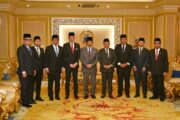


Ts. Mohd. Faizal Malik
Kota Kinabalu: Constructing a new terminal at the Kota Kinabalu International Airport (KKIA) is just a short-term solution.
The offer from The Federal Government, which is aimed at catering to KKIA’s growing demand, unfortunately does not meet the airport’s future needs as the second busiest airport in Malaysia.
According to senior aviation consultant, Ts Mohd Faizal Malik, adding a new terminal at KKIA does not address its current limitation, stressing that KKIA remains a single runway airport.
“KLIA has three runways, and with KKIA being the second busiest airport in the country, at the very least Sabah need an airport that have dual runways to cater for its future growth,” said Faizal, who is also the Chairman of Nexgen CMILT (Chartered Institute of Logistics and Transport) Sabah.
He also pointed out that there is not much room for expansion at the airport’s current site due to its proximity to the coastline and its surrounding areas, which are densely populated.
Furthermore, any attempt to do a land reclamation will adversely affect the beauty of Tanjung Aru as well as jeopardise any future development at the area and its surroundings.
Faizal also added that due to KKIA’s proximity to the densely populated areas like Putatan and Tanjung Aru, issues such as noise and air pollutions, as well as health and safety of residents living within the vicinity should be taken into critical considerations.
“We should learn from the issues faced by the Subang Airport previously, which ultimately forced its relocation and the construction of the Kuala Lumpur International Airport (KLIA) in Sepang.
“The imminent saturation of the current facility, underscores the urgency of the proposed relocation to Tuaran or Kimanis, both location offering ample space and resources to accommodate the escalating number of passengers and sustain the trajectory of Sabah’s aviation sector,” said Faizal.
The proposed relocation, necessitated by the current airport nearing its maximum capacity of 10 million passengers per-annum, and already handling approximately nine million passengers annually, aims to address the growing demands of modern aviation.
Faizal also highlighted that with the rapid development of East Kalimantan, as the new capital of Indonesia, it is essential for Sabah to develop its competitive advantages.
As such investing and modernising its facilities such as having a modern airport will not only attract investors but also improve Sabah’s air connectivity and leverage its advantage and complement the development in Kalimantan, as well as in BIMP-EAGA region.
However, Faizal cautioned that any proposed relocation will need to undergo thorough assessments, feasibility studies, and community consultations to ensure alignment with both regulatory requirements and the best interests of all stakeholders involved.