

Dr Jeffrey Kitingan
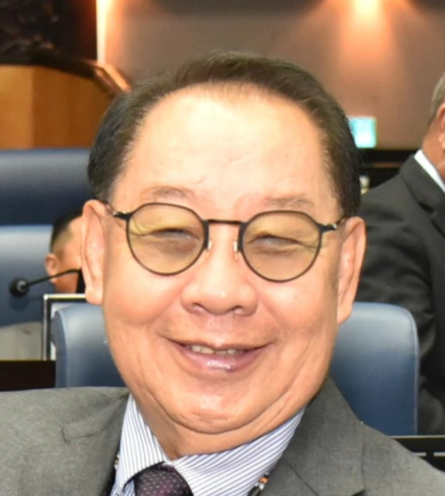
KOTA KINABALU: Deputy Chief Minister I Datuk Seri Dr Jeffrey Kitingan has firmly rebutted claims by Deputy Prime Minister Datuk Seri Ahmad Zahid Hamidi that the “Sabah for Sabahans” sentiment is divisive and counterproductive.
Dr Jeffrey, who is also President of Parti Solidariti Tanah Airku (StarSabah), said such remarks disregard Sabah’s historical and constitutional rights, and insult the legitimate political will of its people.
“Such a statement ignores history, distorts the facts, and dismisses the legitimate political will of Sabahans,” he said. “We do not need permission to speak for ourselves, nor do we require validation from any federal figure to assert what is rightfully ours.”
He stressed that the “Sabah for Sabahans” movement is not a call for rebellion, but a principled stance in favour of political dignity, constitutional integrity, and historical truth.
Dr Jeffrey reiterated that Sabah was never meant to be a subordinate state within Malaysia. Instead, Sabah entered the federation in 1963 as an equal partner alongside Sarawak and Malaya under clearly defined terms outlined in the Malaysia Agreement 1963 (MA63) and the Inter-Governmental Committee (IGC) Report.
“For decades, Sabah has been treated like a resource colony while our voices were suppressed,” he said, adding that the federal government has gradually dismantled the spirit of MA63.
He listed several long-standing grievances, beginning with the federal government’s takeover of Sabah’s oil and gas resources since 1976 without proper consultation or consent from the state’s leaders or people.
Dr Jeffrey also pointed to the erosion of Sabah’s constitutional status, noting that its designation as a “Negara” and equal partner in the federation has been omitted from both federal and state constitutions.
He condemned the “Project IC” scandal, which he said led to the mass issuance of identity cards to illegal immigrants, permanently altering Sabah’s demography and political landscape.
“The Sabah Constitution was tampered with to accommodate the entry of Malayan parties, who rotated the Chief Ministership like tokens until UMNO’s turn arrived,” he said.
He also expressed concern that large tracts of Sabah’s land and forests were alienated to entities far from the state, enriching outsiders while locals were left behind.
Dr Jeffrey said that federal fiscal policies continue to deprive Sabah of its rightful revenue share, resulting in underdeveloped infrastructure and social services despite the state’s rich natural resources.
“The promise of Borneonisation remains broken,” he added, noting that many key positions in federal departments and agencies in Sabah are still held by officers from Peninsular Malaysia.
Dr Jeffrey questioned why Sabahans are now being told to stay silent, despite years of being sidelined. “And now, after all these, we are told not to express our own aspirations? To sit quietly while Malayan parties negotiate among themselves over who gets to rule Sabah?” he asked.
He said Sabahans should not be made to feel guilty for demanding greater autonomy and respect, adding that such demands stem from decades of marginalisation and broken promises.
“We will not apologise for wanting control over our own future,” he asserted. “Sabah has the right to decide its own direction.”
He warned that if Malaysia is to survive as a meaningful federation, it must be based on genuine partnership, not domination or political manipulation.
“‘Sabah for Sabahans’ is here to stay. It is not a temporary political slogan. It is a long-overdue restoration of truth,” Dr Jeffrey said firmly.
He insisted that what is truly divisive is not the call for Sabah’s rights but the continued federal arrogance that refuses to acknowledge Sabah’s rightful place in the federation.
“Our cooperation with Putrajaya must be based on respect and equality, not subservience,” he said, adding that while Sabah is willing to work with the federal government, it will no longer tolerate interference, manipulation or exploitation.
“Sabah is not a colony of Malaya. We never were and we never will be.”
Whether Sabah remains a strong partner in the Malaysian federation or takes a different path, Dr Jeffrey said, will depend entirely on how it is treated in the near future.
“That decision will be made not in Putrajaya but right here, by the people of Sabah,” he said.