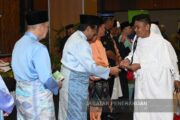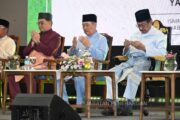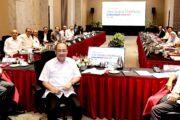


All 50 RMIT University students with their Coordinators from RMIT University and UMS
KOTA KINABALU: RMIT University has chosen Universiti Malaysia Sabah (UMS) for its Study Tour to Borneo 2023 mobility programme this year that ended recently.
The Australian Government sponsored this study visit under the New Colombo Plan, participated by 50 RMIT students from several disciplines.
The New Colombo Plan is a hallmark programme of the Australian Government that intends to increase knowledge of the Indo-Pacific region in Australia by assisting Australian students to study and intern throughout the region.
According to the UMS Centre for Internationalisation and Global Engagement, the mobility programme comprised a symposium, woodcutting workshop, cultural cookery courses and an exhibition of student goods was held from May 29 to June 14.
“The itinerary includes a visit to the Kadazan Dusun Cultural Association (KDCA) Hongkod Koisaan hall for the Kaamatan Festival as well as a stay at a local guesthouse in Kiulu. The highlight of the journey was an exceptional mobility (academic exchange) programme at the UMS Faculty of Social Sciences and Humanities.
“The Australian students collaborated with first-year students from the Sociology and Social Anthropology Department who are doing a Religion and Society Course,” it said in a statement.
The centre said the study tour director from RMIT Associate Professor Dr Olivia Guntarik and UMS Faculty Coordinator Dr Trixie Tangit have designed the special mobility programme so that both RMIT and UMS students can find ways to incorporate their ideas by taking at least one aspect or element from each other’s project.
“These students spend time talking with one another and travelling to places of interest throughout Sabah to expand their knowledge and understanding. Their collaborative endeavours culminated in an exhibition of free-form design and posters.
“The exhibition was a major success based on the originality, effort and learning points that both RMIT and UMS students were able to create in such a short period,” it added.
UMS students, particularly those nearing the conclusion of their first year, developed by leaps and bounds as they forced themselves to critically think through the principles of their projects.
Meanwhile, RMIT students also benefited from the programme, as they learned to understand a local culture other than their own and used their newfound knowledge on their show.
“RMIT students incorporated local music, artwork, language as well as natural elements such as leaves and flowers to bring their projects to life,” it said.