

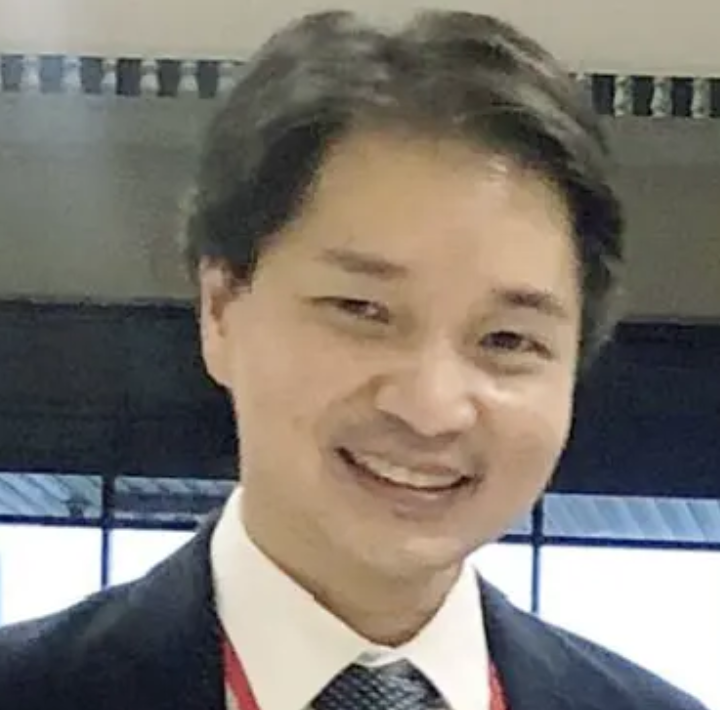
Rpger Chin
KOTA KINABALU: A pivotal constitutional battle concerning Sabah’s right to 40% of federal revenue collected from the state will finally be heard in full by the High Court of Sabah and Sarawak here on July 7, 2025.
The case, spearheaded by the Sabah Law Society (SLS), seeks a judicial determination on whether the Federal Government has failed in its constitutional obligation to return Sabah’s rightful revenue share — an entitlement enshrined in Article 112C and the Tenth Schedule of the Federal Constitution — for nearly five decades.
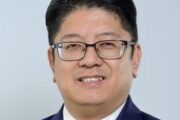
“This is not a political matter. It is a constitutional issue that has remained unresolved for far too long,” said Roger Chin, Immediate Past President of SLS, in a statement.
What the Case Concerns
At the heart of the case is the so-called “40% entitlement” — a special annual grant meant to return two-fifths of the net revenue collected by the Federal Government from Sabah, above a 1963 baseline. While a first review was conducted in 1969, a second review required by 1974 was never carried out.
“No review occurred between 1974 and 2021,” the SLS notes, referring to this prolonged gap as the “Lost Years.” The Society contends that the failure to conduct the mandatory review and make appropriate payments constitutes a breach of the Federal Constitution.
Positions of the Parties
The Sabah Law Society, as the applicant, argues that the entitlement is a binding constitutional guarantee and not subject to federal discretion. The Society is asking the court to confirm that the failure to make payments based on the 40% formula since 1974 is unlawful.
The Federal Government, as the first respondent, counters that the 1969 review replaced the original entitlement with a fixed grant, and that subsequent annual payments of RM26.7 million meet its constitutional obligations. It denies that any arrears are owed, claiming the grant is subject to negotiation and not a fixed percentage of revenue.
The Sabah State Government, named as the second respondent, acknowledges the absence of a review from 1974 to 2021 but stresses that it has consistently called for one. It notes that it entered interim agreements with Putrajaya in 2022 and 2023 due to urgent fiscal needs, without waiving its claim to the original 40% formula or the right to seek arrears.
Why It Matters
The hearing marks a historic moment for Sabah in asserting its rights under the Malaysia Agreement 1963 framework. The outcome could significantly impact Sabah’s fiscal autonomy and redefine the federal-state relationship.
“This case is about constitutional fidelity and federalism,” said Chin. “Every Sabahan has a stake in the outcome.”
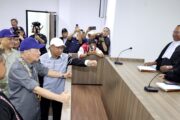
The High Court hearing will be held in open court on July 7 at 9 am, and members of the public are encouraged to attend.
Public Engagement
To foster greater public understanding, the Sabah Law Society will host a townhall session on the matter at its Secretariat in Kota Kinabalu on June 20 at 3 pm. Seats are limited and will be available on a first-come, first-served basis. Interested individuals may register by calling 088-232662.
“This is a rare opportunity for Sabahans to witness a fundamental question of public interest being argued in court,” added Chin.