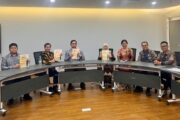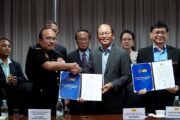


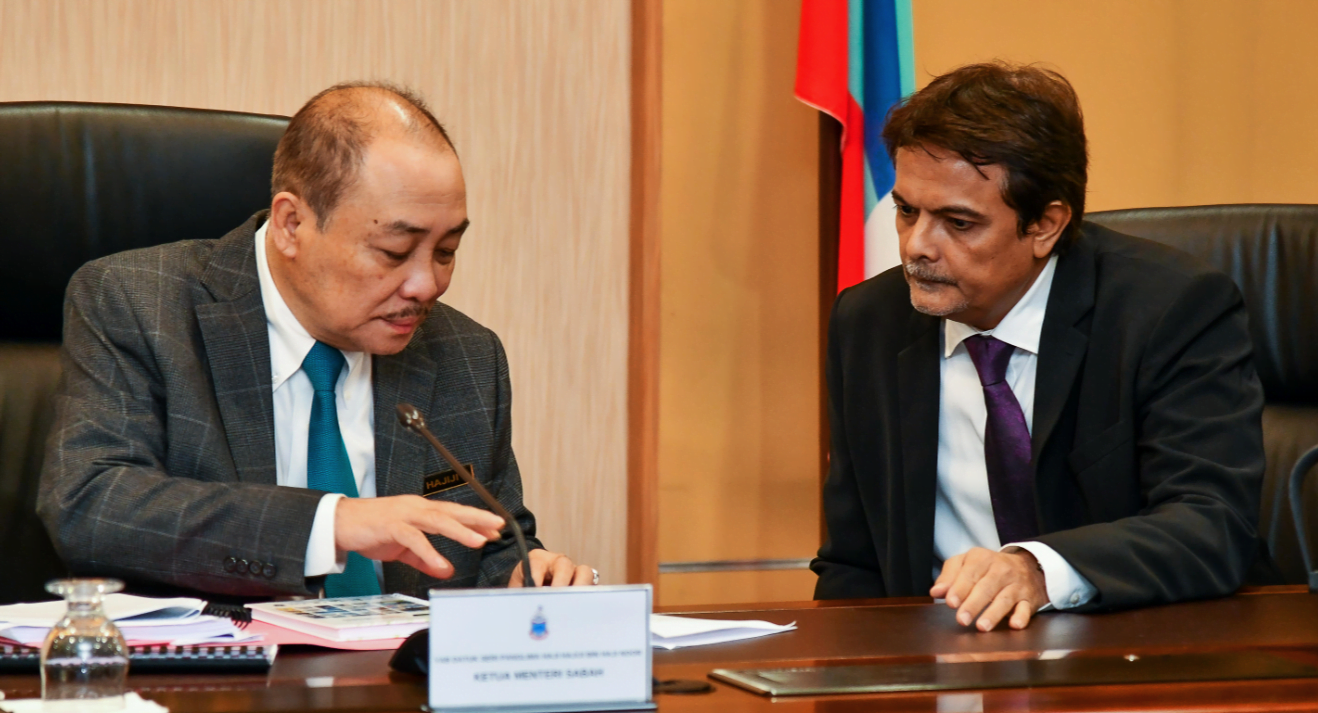
Hajiji discussing with ECoS CEO Datuk Abdul Nasser Abdul Wahid before the MTS meeting starts.
KOTA KINABALU: The Sabah Energy Council (MTS) has approved various initiatives including exploring new renewable energy sources that will help to achieve and sustain a 30 per cent generation reserve margin and address power shortage in the state.
Chaired by Chief Minister Datuk Seri Haji Hajiji Haji Noor, the Council in its inaugural meeting today agreed on feasibility studies to be conducted on new energy sources such as wind, geothermal and low-head submersible Hydropower projects to increase the state’s renewable energy mix.
Other proposals by the Energy Commission of Sabah (ECoS) included an interim extension of viable existing power plants, purchasing power from biomass plants, ensuring completion of ongoing Large Scale Solar (LSS) projects and additional new LSS, procuring capacity from Sarawak, implementing Battery Energy Storage Systems (BESS), additional natural gas-fired power plants as transitional fuel and revival of Geothermal plant.
The completion of the Sabah Hydropower Development Master Plan by the end of this year is also expected to support the state’s power generation initiatives.
As for the long-term plan, the State Government is exploring new technologies like Small Modular Reactors (SMRs) in collaboration with the Federal Government and Ocean Thermal Energy Conversion (OTEC) under the Sabah Blue Economy Plan following the recent approval of the OTEC Enactment 2024 in the State Legislative Assembly.
The Chief Minister in his opening remarks stressed that the State Government is committed to a sustainable energy future for Sabah through the implementation of the Sabah Energy Roadmap and Masterplan 2040 (SE-RAMP 2040) that was launched on Sept 19 last year.
“SE-RAMP 2040 outlines various strategies and initiatives to balance energy needs and ensure energy security, affordability, and environmental sustainability,” he said, adding that the MTS meeting focused on addressing Sabah’s current energy challenges, including capacity shortage and grid stability as well as planning to meet the electricity demand needs over the medium and long term.
He also called for collective action from all stakeholders, which is vital to ensure the successful implementation of these plans and initiatives.
Earlier Hajiji said the role of the MTS, approved by the State Cabinet on March 6 this year, was to ensure the efficacy of the SE-RAMP 2040 strategies and initiatives. The MTS chaired by the Chief Minister and comprised of 11 permanent members namely the Works Minister, Industrial Development and Entrepreneurship Minister, State Secretary, Finance Ministry Permanent Secretary, Works Ministry Permanent Secretary, Industrial Development and Entrepreneurship Ministry Permanent Secretary, State Economic Planning Unit Director, Sabah Maju Jaya Secretariat Chief Coordinating Officer, ECoS Chairman and ECoS Chief Executive Officer.
The respective CEOs of the Sabah Energy Corporation Sdn Bhd, SMJ Energy Sdn Bhd and Sabah Electricity Sdn Bhd are invited members.
MTS was set up following the handing over of power regulatory authority from the Federal Government to Sabah and to replace the Sabah Tariff and Electricity Supply Implementation and Planning Committee (JPPPET).