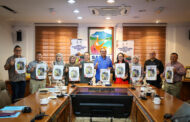


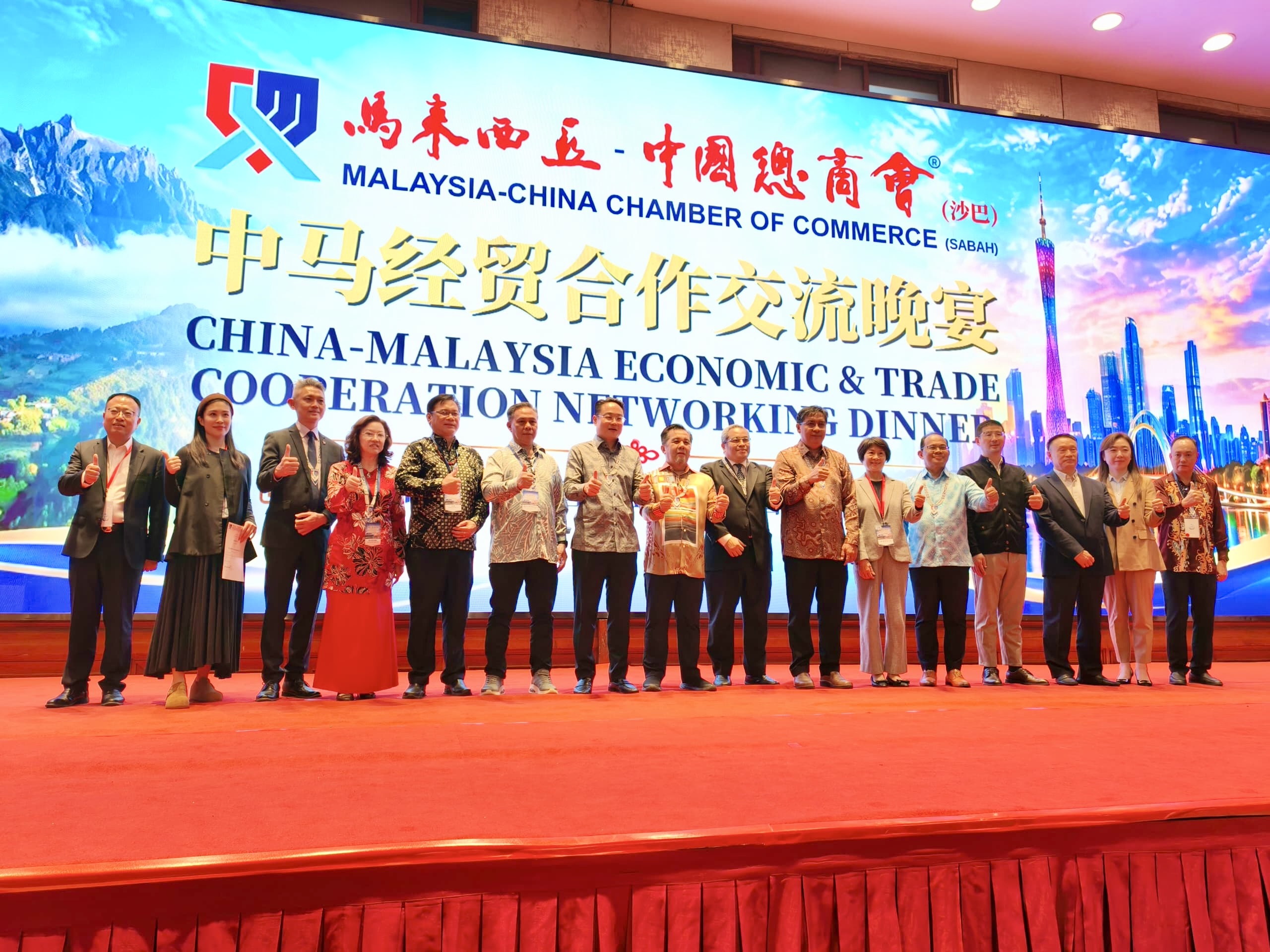
GUANGZHOU: The Malaysia-China Chamber of Commerce (MCCC) Sabah has signed five memoranda of understanding (MoUs) with five Chinese chambers of commerce to strengthen trade, investment and business cooperation between Sabah and China.
The agreements, which also cover ginseng trading, are aimed at expanding business opportunities and promoting cross-border economic partnerships.
The signing ceremony was witnessed by Sabah Agriculture, Fisheries and Food Industry Minister Datuk Jamawi Jaafar, while MCCC Sabah President Datuk Dexter Lau signed the agreements with representatives of the respective Chinese chambers.
The five chambers involved were Guangzhou Overseas Chinese Chamber of Commerce, Guangzhou Chamber of Commerce for Outbound Business, Xingtai Chamber of Commerce, Jilin Northeast Asia Trade Chamber of Commerce and Jilin Ginseng Chamber of Commerce.
Their representatives were Vice Presidents Xie Jianhua and Shan Tao, and Presidents Liu Ning, Fan Qiuhong and Du Zhansheng, respectively.
Under the MoUs, both parties agreed to promote trade and investment cooperation, strengthen business exchanges and explore further cross-border business opportunities.
The agreement with the Jilin Ginseng Chamber of Commerce will also open new avenues for cooperation in the ginseng trade.
The signing took place during the Malaysia-China Guangzhou Networking Dinner, which brought together 500 Malaysian and Chinese entrepreneurs for networking, business exchanges and discussions on potential cooperation.
In his speech, Jamawi commended MCCC Sabah, under the leadership of Lau, for its efforts in strengthening business relations between Malaysia and China.
He said organising an event of such scale required extensive preparation, coordination and commitment, adding that MCCC Sabah played an important role in connecting businesses, promoting international engagement and helping Sabah enterprises explore opportunities in the Chinese market.
“I commend Datuk Dexter Lau and his team for their vision and sustained commitment to strengthening Malaysia-China business relations,” he said.
Jamawi hoped MCCC Sabah would continue working closely with the Ministry of Agriculture, Fisheries and Food Industry (MAFFI) and relevant government agencies to facilitate targeted business matching, attract potential investors and establish practical, long-term partnerships in agriculture, fisheries and the food industry.
He said the Government expected the visit to produce tangible outcomes, including new trade opportunities, wider market access, technology transfer and mutually beneficial investment partnerships between Sabah and China.
Earlier, Lau said MCCC Sabah remained committed to strengthening economic and trade ties between Malaysia and China.
He said the business delegation’s visit to Guangzhou focused on agriculture, fisheries, food processing and modern technology.
The visit aimed to gain deeper insights into China’s development and technological advancements in these sectors, while identifying new opportunities for business partnerships, investment and trade for Sabah’s business community.
He expressed confidence that the site visits, business exchanges and MoU signings would strengthen links between businesses in Sabah and China, facilitate resource matching and pave the way for commercially viable cooperation projects.