

Mount Kinabalu
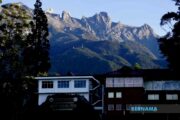
KOTA KINABALU: Construction activities recently highlighted on social media at Mount Kinabalu are part of the approved development of the High Altitude Training Centre (HATC), said Tourism, Culture and Environment Minister Datuk Jafry Ariffin.
He said the project was intended to enhance mountaineering facilities through the provision of basic accommodation to support specialised high-altitude training and mountaineering activities.
Jafry said the HATC was originally proposed under the Kinabalu Park Development Plan in 2015 but its implementation was deferred following the earthquake that struck Mount Kinabalu that year.
“The initiative was subsequently revived and officially launched in 2025 as part of Sabah’s efforts to diversify its tourism offerings and strengthen its position as an internationally recognised mountaineering destination,” he said in a statement today.
Jafry stressed that the project had obtained the necessary approval from the Sabah Parks Board of Trustees, as well as the endorsement of the Mount Kinabalu Native Customary Advisory Council.
He said the involvement of the customary advisory body reflected the importance of respecting the cultural and spiritual significance of Mount Kinabalu to indigenous communities.
“Mount Kinabalu is more than a tourism destination. It is an important part of Sabah’s natural and cultural heritage, deeply connected to the traditions, beliefs and identity of our indigenous communities.
“Economic opportunities and tourism advancement must never come at the expense of our cultural heritage,” he said.
Addressing environmental concerns, Jafry said the development used lightweight, prefabricated and modular building materials to minimise disturbance to the surrounding environment.
The structures were also designed to withstand strong winds and challenging weather conditions at higher elevations, without the use of heavy machinery during construction.
He said the Ministry would ensure that all construction activities strictly complied with approved specifications, environmental requirements and relevant laws and regulations.
“While the project has received the necessary approvals, this does not exempt any party from complying with the established conditions, technical specifications and regulatory requirements.
“We will not hesitate to take appropriate action against any party found to have violated the stipulated conditions or failed to comply with the relevant laws and regulations,” he warned.
Jafry said the Ministry would also consider conducting a thorough investigation in coordination with Sabah Parks and other relevant authorities to verify that construction activities complied with all applicable requirements.
He said public concerns following the circulation of photographs showing construction activities on the mountain were taken seriously.
“Prior approval does not mean unrestricted permission to carry out development. Every stage of implementation must remain accountable to the laws, regulations and conditions governing the protection of Mount Kinabalu.
“Should any non-compliance be established, the Ministry will not hesitate to pursue the necessary enforcement measures in accordance with the law,” he said.
Jafry explained that the HATC would provide a specialised training environment for mountaineers preparing for expeditions to higher-altitude destinations, including Mount Kilimanjaro, Aconcagua and Mount Everest.
The facility would support altitude acclimatisation, technical mountaineering training and familiarisation with specialised climbing equipment, catering to both domestic and international climbing communities.
He said Mount Kinabalu had a distinct advantage because of its accessibility, established mountaineering infrastructure and internationally recognised geological landscape.
“With its proximity to Kota Kinabalu International Airport, Mount Kinabalu offers a relatively accessible and cost-effective environment for specialised mountaineering training.
“The HATC also presents opportunities to attract international mountaineering clubs and organisations, creating additional economic benefits for local communities and the wider tourism industry,” he said.
He added that the initiative supported the broader objectives of the Kinabalu UNESCO Global Geopark through responsible geotourism, environmental awareness and sustainable tourism development.
Jafry also welcomed public interest in safeguarding Mount Kinabalu, saying such vigilance reflected Sabahans’ strong sense of ownership and responsibility towards the natural heritage.
However, he said public discussions should be guided by accurate information and a clear understanding of the project’s purpose and scope.
He reaffirmed that the State Government remained committed to ensuring tourism development and environmental conservation progressed together.
“Our position is clear. Development must never come at the expense of conservation, nor should progress disregard the cultural values and traditions of our communities.
“Our responsibility is to protect its integrity while ensuring that any improvements serve a meaningful and sustainable purpose,” he said.