

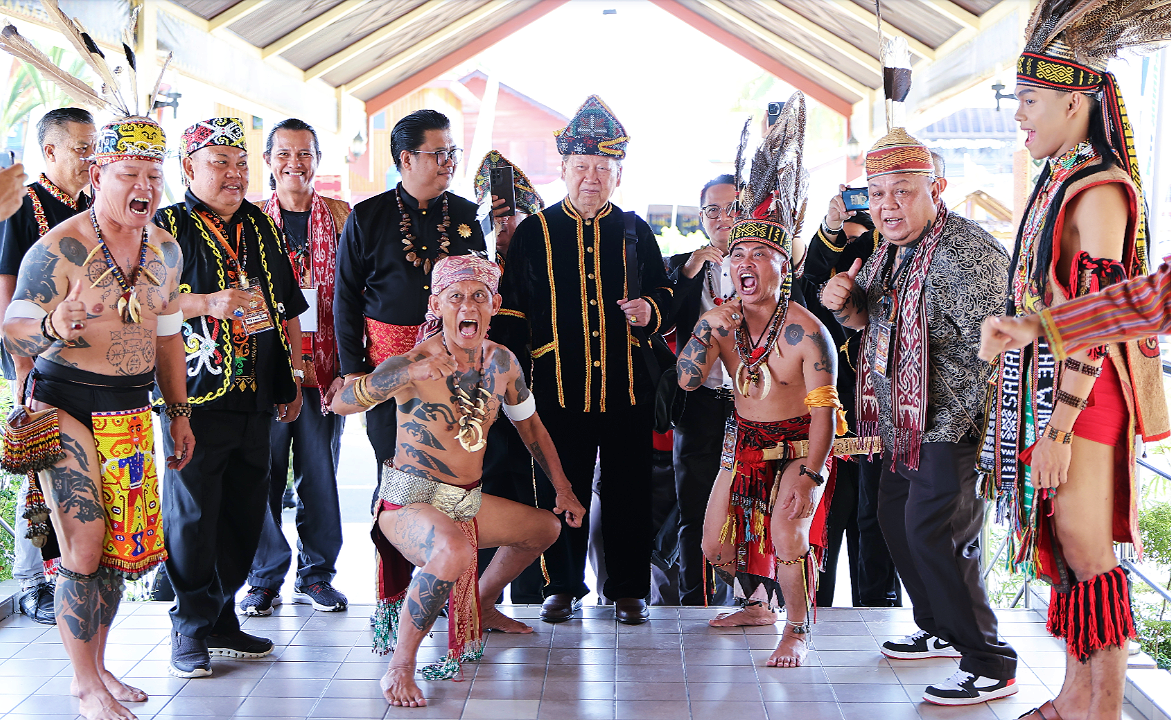
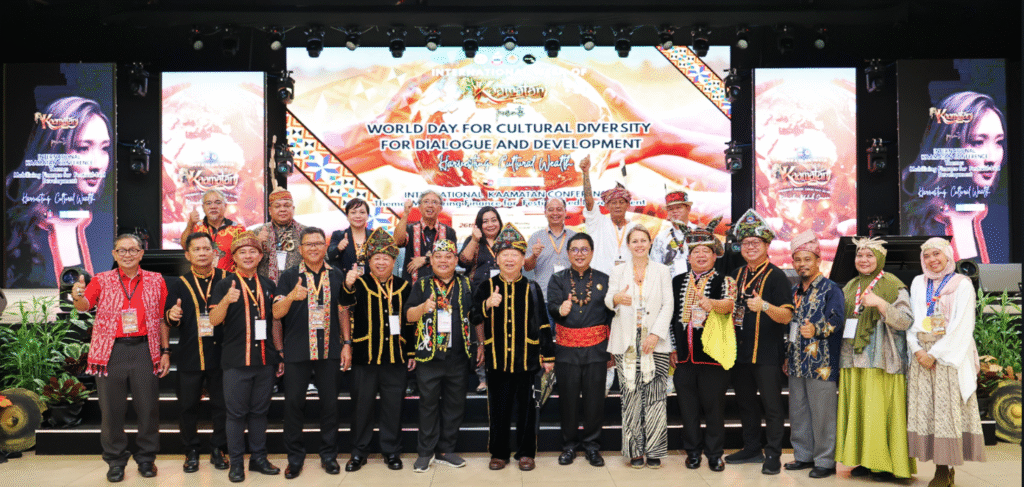
PENAMPANG: The inaugural Kaamatan International Week and World Day for Cultural Diversity for Dialogue and Development Conference convened more than 150 cultural leaders, activists and innovators from Sabah, Sarawak, Kalimantan, the Philippines and the United Kingdom at Hongkod Koisaan, Kadazan Dusun Cultural Association (KDCA), here, on June 26.
With the theme “Harvesting Cultural Wealth: Mobilising Finance for Festival-Based Development,” the event reimagined Kaamatan as a global platform for sustainable economic growth rooted in cultural heritage and green innovation.
Guests of honour KDCA President Huguan Siou Tan Sri Joseph Pairin Kitingan and Deputy Chief Minister I Datuk Seri Dr Jeffrey Kitingan highlighted the importance of such gatherings in advancing cultural preservation and festival-driven economic strategies for the future.
Participants included representatives from NGOs, schools, colleges and universities across Sabah—including Tawau, Tambunan, and Keningau.
The conference incorporated a real-time digital dialogue system, promoting inclusive engagement and participatory input from the ground up.
Distinguished speakers from Jungle School Gombak, Calibri Connect UK and various cultural organisations from Kalimantan and the Philippines embodied the event’s spirit of international exchange and cross-cultural cooperation.
Three high-impact keynote addresses anchored the conference.
Organising Chairman Dato Petinggi Andrew Ambrose Atama Katama called for a united Kaamatan celebration encompassing all 217 of Sabah’s sub-ethnic groups.
Citing global data, he said festival economies generate over US$100 billion annually, with Kaamatan alone contributing RM1.5 billion (US$340 million)—comparable to Indonesia’s Nyepi (US$1.3 billion).
He highlighted innovative models such as Jungle Food Lab and heritage rice as cornerstones for ecogastronomy and digital tourism, calling on Sabah’s youth to lead Kaamatan’s future within the Blue Economy framework.
Pairin delivered an emotionally resonant address rooted in the spirit of Bambarayon, emphasising gratitude and unity as the essence of Kaamatan.
He introduced six strategic pillars—cultural preservation, green development, youth empowerment, biodiversity, advocacy and global networking—positioning Sabah to emulate New Zealand’s Māori economy, valued at US$76 billion.
Celebrating Sabah’s RM2.13 billion in Q1 2025 Kaamatan-linked tourism revenue, he championed initiatives such as traditional rice field revival, indigenous language preservation and youth-led Unduk Ngadau programmes.
Dr Jeffrey closed the event by invoking the legendary sacrifice of Huminodun as a guiding force for festival-based development.
He praised the event’s dynamic exchanges—featuring speakers such as Katie Anne Whiddon and YTH Bapak Drs Yakubus Kumis—and applauded TV Sabah’s OTT platform for expanding Kaamatan’s global reach.
Linking paddy revival efforts through the Sabah Padi and Rice Board (LPBS) with employment generation under the Hala Tuju Sabah Maju Jaya (SMJ) Plan, he positioned the festival economy as a solution to Sabah’s 7.7 per cent unemployment rate.
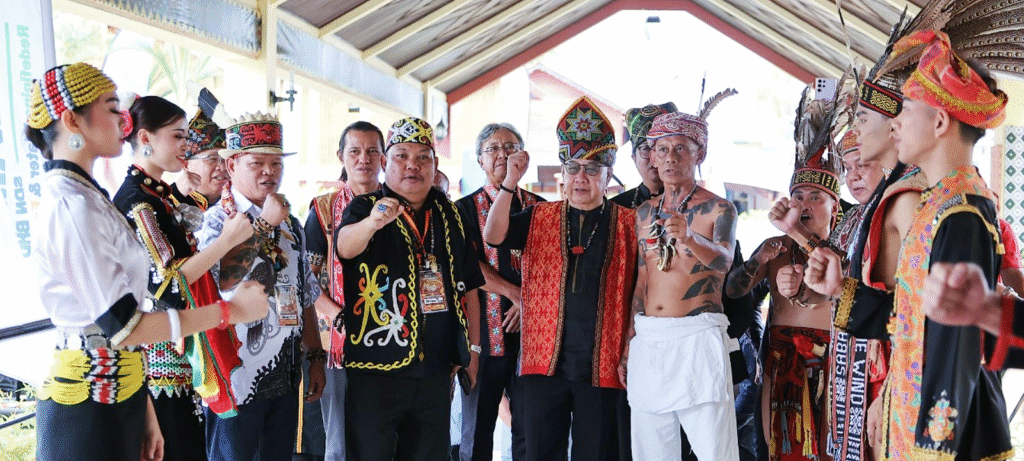
The conference featured six thematic sessions moderated by local experts and cultural custodians. On cultural preservation, panelists included Assoc Prof Dr Veronica Atin, Albert Moguring and Norzalifa Zainal Abidin, moderated by Allan Dumbong. On indigenous land and cultural biodiversity, Galus Ahtoi and Jhonathan Yuditya spoke under the moderation of Mohd Yusrie Abdullah. The session on sustainable economic development featured Major (Rtd) Kalam Pie, Datuk Joanna Kitingan and Harvic G Dominguez, moderated by Captain John Otigil. Youth empowerment was discussed by Nurul Aina Suhaila Mohd Niza, Jhonathan Yuditya, and Allan Dumbong, with Rindawan Steve Mositun as moderator. On biodiversity and ecological wisdom, Katie Anne Whiddon, Hanif Falah and Gundohing Jeams Suali shared insights, again moderated by Allan Dumbong. In the political participation and advocacy session, speakers included Tony Pariadi Bagang, Dato’ Seri Panglima Peter John Jaban, and Anuar Ghani, also moderated by Allan Dumbong. The concluding keynote on global solidarity was delivered by Atama.
With growing support from UNESCO and strengthened regional ties through BIMP-EAGA, Kaamatan 2026 is set to build on this year’s momentum—positioning Sabah as a regional leader in sustainable cultural economies.
As the festival continues to evolve, it promises not only to preserve indigenous traditions but also to unlock new economic frontiers for future generations.