


KOTA KINABALU: Residents and businesses in Beluran and Telupid faced significant disruptions on February 27 and 28 due to a widespread power outage that lasted almost two days.
The blackout, which originated from multiple cable failures along the 33kV Segaliud-Beluran transmission lines, primarily affected the Lung Manis and Sapi Nangoh areas.
Tracing the Cause of the Blackout
Sabah Electricity Sdn Bhd (Sabah Electricity) Chairman Datuk Seri Wilfred Madius Tangau said the Sabah Electricity first received reports of the outage at 9.30 am on February 27.
He said a response team was immediately dispatched to PMU Segaliud, where they identified a tripped 33kV power line.
While initial repairs restored electricity within an hour, the issue resurfaced around noon, leading to further investigation.
“By 2.10 pm, technicians confirmed a permanent fault in the power line.
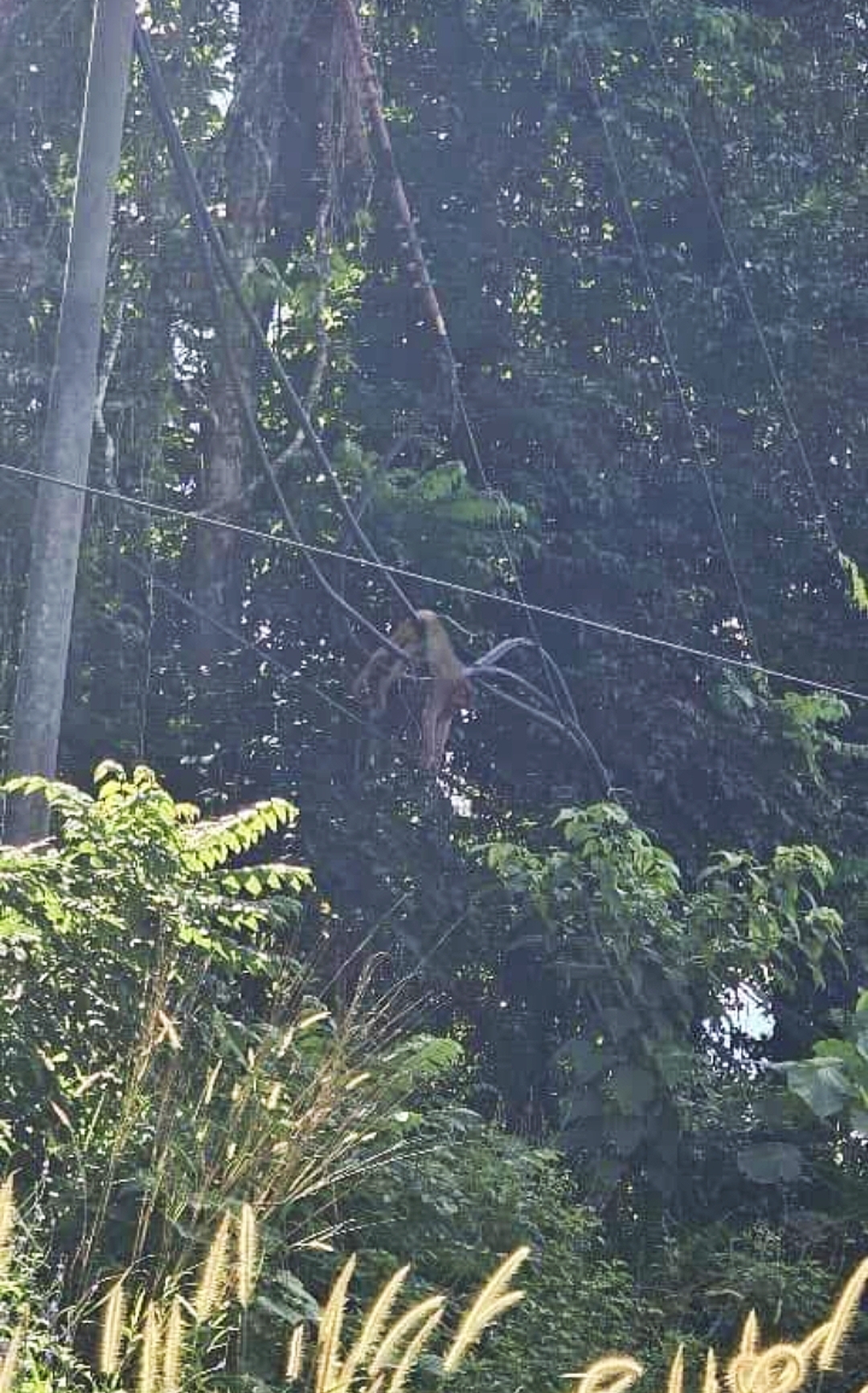
“On-site teams discovered damaged cables, including sections destroyed by monkeys—an issue that Sabah Electricity frequently encounters.
“Crews worked tirelessly into the night to replace burnt and severed cables. Their efforts were hindered by poor road conditions and additional faults detected along the network,” he said in a statement today.
Madius said further complications arose when two broken-down trucks blocked both lanes of the Sandakan-Beluran road, delaying restoration efforts.
“With no alternative, technicians relied on local residents and motorcycles to access switching points and continue repairs. By 11.44 pm, power was restored to most areas, but Lung Manis and Sapi Nangoh remained without electricity until 8.45 pm on February 28.”
Long-Term Solutions: Upgrading to Aerial Bundled Cables (ABC)
Madius acknowledged the frustrations of affected consumers but emphasized the company’s commitment to long-term infrastructure improvements.
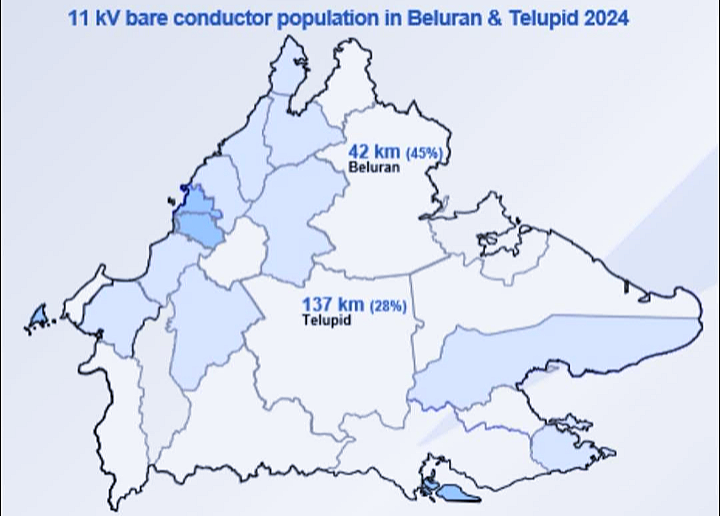
According to him, one of the major challenges in Beluran and Telupid is the continued reliance on uncoated All-Aluminum Conductor (AAC) cables, which are more vulnerable to external interferences.
“A proposed solution is the transition to Aerial Bundled Cables (ABC), which are insulated and reduce the risk of faults caused by tree branches and wildlife.
“However, upgrading to ABC cables in these areas is complex due to strict conservation regulations that limit tree-cutting in protected forest reserves.
“As of now, only 45 per cent of Beluran’s cables and 28pc of Telupid’s have been upgraded, compared to 63pc in areas like Tambunan, where blackouts have been significantly reduced.”
The Road Ahead: Funding and Challenges
Sabah Electricity has made gradual progress in upgrading its electrical network, with 54pc of ABC cables installed statewide.
However, Madius said at the current pace of upgrading 100 kilometers per year, full replacement could take up to 30 years and require RM 997 million in funding.
The company’s plan to upgrade 230 kilometers of cables between 2025 and 2027, at an estimated cost of RM70 million, is still awaiting regulatory approval.
“Without increased funding, progress will remain slow, leaving communities vulnerable to ongoing outages.”
Additional Factors Contributing to Power Disruptions
Madius said beyond aging infrastructure, external factors such as construction projects also contribute to power interruptions.
He said the Pan Borneo Highway development has occasionally caused power cuts due to excavation work affecting underground and overhead lines. Despite coordination with contractors, unexpected incidents can delay restoration efforts.
Logistical challenges further complicate power restoration efforts in rural areas like Beluran and Telupid, where teams often navigate rough terrain and dense vegetation to reach damaged lines.
Ensuring a Reliable Power Supply for All
Madius emphasised that improving power reliability requires a multifaceted approach, including infrastructure upgrades, regulatory support and continued engagement with stakeholders.
“Policymakers must recognize the urgent need for enhanced investment in Sabah’s power infrastructure to ensure rural and semi-rural communities are not left behind,” he stated.
While immediate solutions may not always be available, Sabah Electricity remains committed to strengthening the electricity network across the state and ensuring a resilient power supply for all.