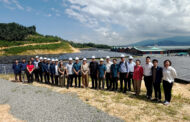


Prof Junaenah with the participants.
KOTA KINABALU: Women should be included in the sustainable development of Sabah rural area, said University College Sabah Foundation (UCSF) Director of Institute of Borneo Studies Prof Junaenah Sulehan.
She highlighted that social entrepreneurship is a powerful strategy to enable the active participation of women, particularly in rural communities.
She was speaking at a Workshop on Sustainable Development and Social Enterprise organised by the institute at Kampung Mansiat, Pensiangan, on Oct 27-29.
The workshop aimed to educate and empower 13 women farmers from five villages on the importance of sustainable development, sustainable farming practices, and social enterprise.
This workshop marked the second phase of the Community Herbs Garden: Social Business for Rural Women Entrepreneurs project, which has been funded by the All-Party Parliamentary Group Malaysia (APPGM-SDG) since 2021.
The programme included a two-day face-to-face workshop and training, featuring site visits to local farms and gardens.
The participating women farmers expressed their enthusiasm for the program, as it provides them with an opportunity to transform their herbs garden into a consistently profitable source of sustainably farmed organic herbs, spices, and various other produce for the industry.
They eagerly anticipate the next phase of the project, which will focus on teaching them how to process their herbs and produce, eventually leading to packaging and selling.
These five villages are located in the Nabawan district, where over 30 per cent of the population relies on agriculture as a means of livelihood.
The workshop has equipped these women farmers with valuable knowledge and skills, empowering them to contribute to the sustainable development of their communities and enhance their economic prospects.
UCSF Vice Chancellor Dr Rafiq Idris expressed the importance of uplifting marginalized communities and ensuring they are vital players in Sabah’s 21st-century economy.
He hopes that UCSF will continue coordinating capacity-building workshops and programmes, especially those that have a high impact on rural communities.