


KOTA KINABALU: Political cooperation between Gabungan Rakyat Sabah (GRS), Pakatan Harapan (PH) and Barisan Nasional (BN) should continue to ensure the stability of the State Government and the continuity of Sabah’s development agenda.
Chief Minister Datuk Seri Haji Hajiji Haji Noor said a stable government was crucial to ensuring that all development plans and policies could be implemented in the interests of the people.
He said GRS was established to fulfil the aspirations of Sabahans who wanted a strong government that prioritised the interests of the State.
“We want stability. If we want stability, we must work together with those who are in the Government now. Our cooperation with PH and BN will continue in the coming General Election and State Election,” said Hajiji, who is also GRS Chairman.
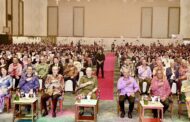
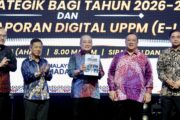
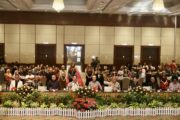
He was speaking at the Sabah Chief Minister’s Appreciation and Dinner with the Sabah Community Development Leaders Unit (UPPM) at the Sabah International Convention Centre (SICC) here last night.

Haji Hajiji Haji Noor
Hajiji said political struggles must be based on honesty and prioritise the interests of the people and the State, rather than merely making statements or engaging in rhetoric without action.
He said he had drawn lessons from previous political developments and hoped all parties in the Government would remain committed to the cooperation that had been established.
Meanwhile, when met by reporters, Hajiji said discussions on political cooperation between GRS, BN and PH for the coming General Election had yet to begin, but cooperation within the current State Government would continue.
He said political stability was important to ensure that the State’s development could be planned in a more organised and effective manner for the benefit of the people.
He said views from BN and PH on the political cooperation would be discussed to reach a mutual agreement, but stressed that GRS would remain at the helm of the State Government.
“The current political alignment within the Government is what we will continue. We will discuss it later to reach a mutual agreement. But as far as I am concerned, the Government we lead is a Government headed by GRS,” he stressed.
Earlier, he also reminded community leaders to help defend the Government against baseless allegations and accusations, particularly those circulated on social media.
He said they should explain the actual facts about the Government’s achievements and initiatives to the people to prevent the public from being influenced by inaccurate information.
Hajiji also said the State Government had managed to increase Sabah’s revenue from about RM4 billion when it first took over the administration to almost RM8 billion. The State’s financial reserves had also risen from about RM2.8 billion to more than RM7 billion through prudent financial management.
He said the increase in revenue had enabled the Government to channel more benefits to the people and allocate additional funds for village road and bridge projects, as well as improvements to water supply capacity.
On the oil and gas industry, Hajiji said PETRONAS had discovered two oil wells in the Sandakan area which could potentially begin operations in 2029, with Sabah expected to secure a 15 per cent equity stake.
He said exploration efforts off Pulau Sebatik also had the potential to provide Sabah with at least a 25 per cent interest if successful, in addition to returns through equity, State sales tax and royalties.
According to him, Sabah was also expected to secure a 40 per cent equity interest through the FLNG project in the State’s West Coast waters.
In addition, PETRONAS had awarded about 449 local contracts to Sabah-based companies, compared with fewer than 10 companies previously.
He said these developments were among the outcomes of cooperation between the State Government and PETRONAS that the people should be made aware of.
He stressed that a strong Government depended not only on the policies formulated but also on the ability of all parties to implement them effectively.
“A strong Government is not determined solely by its policies, but by how they are implemented by all of you and the Government departments. If the policies we have formulated cannot be implemented as effectively as possible, this could also lead to our failure,” he said.