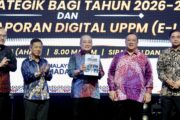


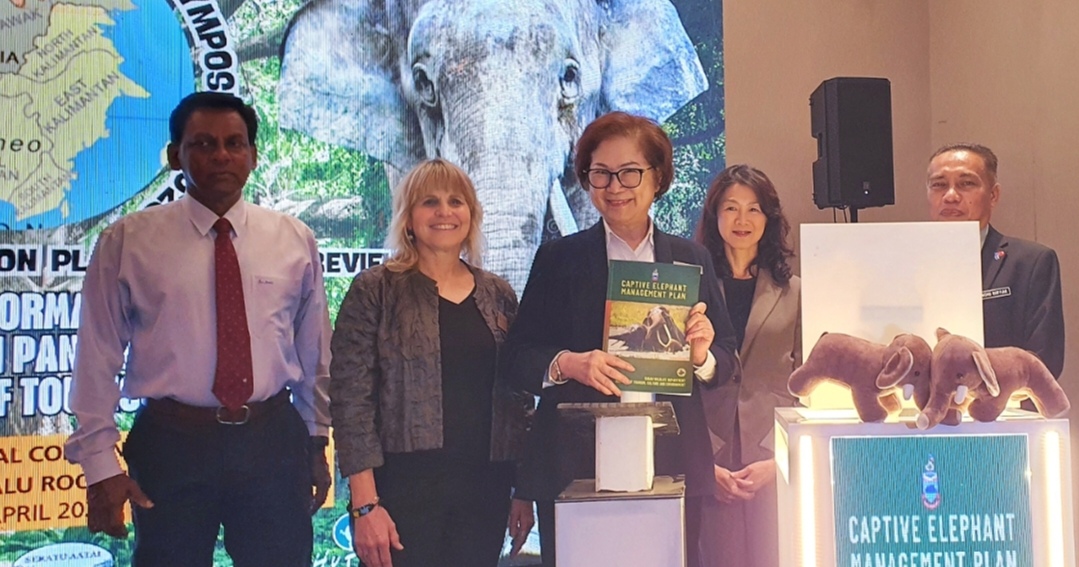
Liew (middle), displaying the book on Captive Elephant Management Plan (CEMP) after unveiling it to mark the launching of the Plan. The book was published by the Sabah Wildlife Department (SWD). Flanking her are the Ministry’s Permanent Secretary Datuk Josie Lai (on her left) and Elephant Conservation Lead, Oregon Zoo, Dr Sharon S. Gleaser. Also in the picture are SWD Director Mohd Soffian Abu Bakar (right) and Malaysian Association of Zoological Parks and Aquaria (MAZPA) President Dr Kevin Lazarus.
KOTA KINABALU: Wildlife rangers have identified several “suspects” in the case involving the decapitation of a Borneo Pygmy elephant early this month, says Tourism, Culture and Environment Minister Datuk Christina Liew.
Speaking to reporters after officially launching the Captive Elephant Management Plan (CEMP) and declaring open the Bornean Elephant Conservation Symposium at the Sabah International Convention Centre (SICC) here today, she said she has received information to this effect from the Sabah Wildlife Department (SWD) Director.
“However, there is no hard evidence as yet. Be assured we will pursue the matter as I am anxious to hunt down the elephant poachers or killers for their cruel act and charge them in court, accordingly. The Sabah Wildlife Department will continue its investigation into the case,” Liew said.
Earlier, in her opening address, the Minister suggested that the department offer an “incentive” to encourage eyewitnesses to come forward and give evidence.
“Perhaps there are eyewitnesses but they are unwilling or hesitant to furnish crucial information that could lead to the arrest, prosecution and sentencing of the perpetrators for their brutal crime,” she said.
Calling for strengthening of enforcement to protect our elephants, Liew stressed that poaching and illegal killings must be met with strict prosecution to deter future offences.
“Snare traps, the ‘silent killer’ of our wildlife, must also be eradicated. This requires increased patrolling, active removal of traps and harsher penalties for offenders.
“The reality is that human-elephant conflict exists. But we will not allow the Bornean elephant to be pushed towards extinction. Let us pledge to safeguard one of Sabah’s most iconic and majestic species, the Bornean elephant, for generations to come,” she said.
The Minister also advocates conservation education from young so that our children will grow up to appreciate wildlife and love the elephant and other animals in our forest environment.
Describing the launching of CEMP as a significant step forward in improving the standards of elephant care in Sabah, Liew said it is also one of the key outputs of the Bornean Elephant Action Plan (BEAP), reinforcing our commitment to ensure best ex-situ practices for elephant management and long-term conservation efforts.
“Our goal is clear – we want our captive facilities, such as the Bornean Elephant Sanctuary (BES) and Lok Kawi Wildlife Park, to be recognised internationally as centres of excellence.”
According to Liew, these facilities provide a haven for elephants that cannot be immediately released into the wild, while also supporting rehabilitation and eventual reintroduction, particularly at the BES in Sandakan.
She said they play a vital role in conservation education, research and sustainable tourism, adding that proper training, resources and recognition for elephant keepers are essential to their work.
“Investing in better infrastructure will enhance elephant welfare and elevate the tourism experience. A well-managed sanctuary and captive elephant centre will strengthen conservation efforts while boosting Sabah’s tourism appeal, attracting visitors eager to support ethical wildlife conservation.”