

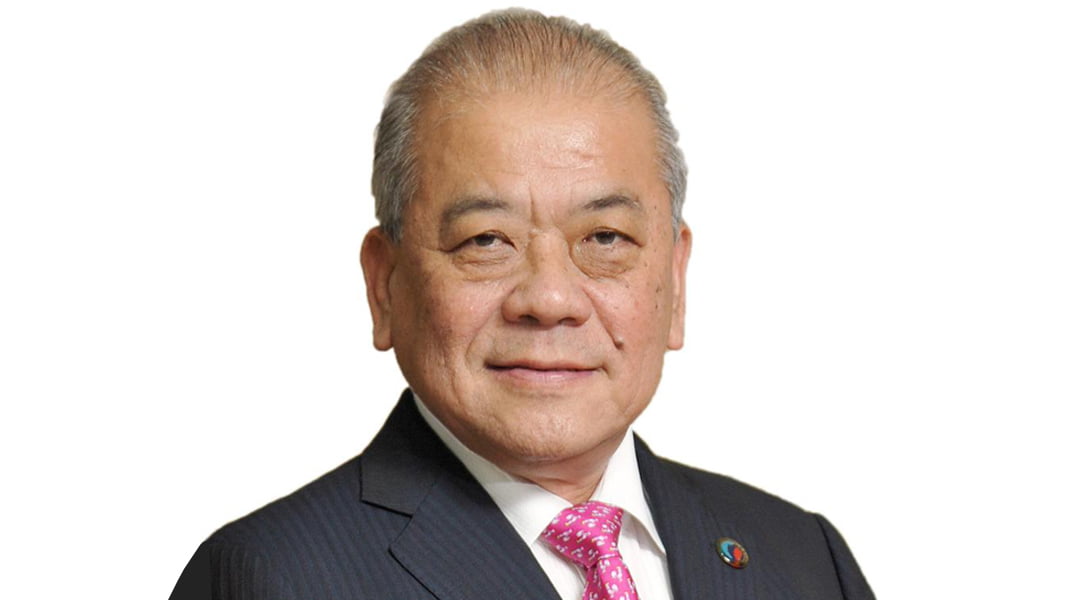
T C Goh
KUALA LUMPUR: The Federation of Chinese Associations Malaysia (Huazong) President Tan Sri T C Goh has expressed relief and welcomed the Federal Cabinet’s decision today to overturn the Malaysian Islamic Development Department’s (JAKIM) controversial move to issue guidelines for Muslims attending events at non-Muslim places of worship.
He hopes this serves as a lesson, particularly for any sensitive proposals, which should not be presented as government responses in Parliament, unless they have been thoroughly discussed and approved by the Cabinet.
He added that the Minister in the Prime Minister’s Department (Religious Affairs) should also learn from past incidents, such as the proposal JAKIM suggesting that future food and beverage operators who do not sell pork and alcohol must obtain halal certification. That proposal was ultimately overturned by the Cabinet, which upheld the decision not to impose such a requirement.
“Similar mistakes should not be repeated. In other words, any so-called ‘proposal’ that has not been deliberated, agreed upon or approved by the Cabinet—especially those involving racial and religious sensitivities—should not be unilaterally announced by departments or agencies concerned. Doing so risks triggering public uproar, as seen in the recent case,” he emphasised.
Goh, who is also the President of the Federation of Chinese Associations Sabah (FCAS), said this in a statement today, affirming Huazong’s support for the Cabinet’s decision. He hopes such incidents of “acting first and seeking approval later” will not recur, as they create public unease and disrupt the harmony and inclusivity that Malaysia has long maintained among people of different races and religions.
He further urged Cabinet members, when responding to parliamentary questions on behalf of their departments or the government—especially on sensitive racial and religious matters—to base their responses strictly on policies that have been approved or recognised by the Cabinet.
He contended that announcing policies first and seeking Cabinet approval later is procedurally inappropriate and a reversal of due process.
“Furthermore, responses given in Parliament are often perceived as representing the Government’s current or future policies. If these policies have not yet been approved by the Cabinet, or even by Parliament, how can they be implemented?” he said.
Regarding the now-overturned “Guidelines on Muslim Participation in Non-Muslim Celebrations and Funerals”, Goh noted that while the intended audience was Muslims, many of the proposed guidelines also had a significant impact on the non-Muslim community.
He pointed out that, even without discussing other details, the guideline requiring event organisers to obtain prior approval from the authorities and consult Islamic religious bodies before inviting Muslim leaders to celebrations was already highly controversial and unfriendly. Such a rule would create divisions, erode racial and religious harmony and impose unnecessary inconvenience on organisers. In some cases, it might even discourage them from inviting Muslim leaders or friends, which would be an unwise outcome.
Goh went on to cite Prime Minister Datuk Seri Anwar Ibrahim’s attendance at the Thaipusam celebrations today, as a commendable example of inclusivity. He also noted that many rulers, ministers and chief ministers in Malaysia—past and present—have participated in major Chinese festivals and cultural celebrations, sharing the joy with the Chinese community and all Malaysians regardless of background.
“This open-minded approach has been widely welcomed and appreciated by the public.
“This embodies Malaysia’s multicultural characteristic, built on racial and religious understanding and tolerance since our nation’s founding and independence. Such inclusivity has always been natural and unforced, without the need for restrictions,” he said.